

You’ve found the house. It checks the boxes, the offer’s coming together, and then the question creeps in: what shape is the roof really in?
For most buyers, the roof is the single biggest source of quiet worry. It’s costly to replace and nearly impossible to judge from the ground. A roof inspection replaces that uncertainty with facts.
I’m Scott Frakes, a Board Certified Master Inspector® based in Gaylord. Over more than 2,000 inspections across Northern Michigan, I’ve walked, climbed, and studied a lot of roofs — from lakefront places near Charlevoix to century-old homes in Petoskey to rural builds deep in Otsego County.
This guide explains exactly what I look for during a roof inspection, what it costs, and how the findings should factor into your decision before you buy.
Roof Inspection At a Glance
- The inspection checks the covering, gutters, downspouts, flashing, penetrations, and accessible roof structure for defects and active leaks.
- I inspect from the ground, from the eaves at a ladder, and/or by walking the roof when it’s safe to do so.
- Roof age and remaining life are among the biggest factors in a buyer’s decision. A roof near the end of its life is a real negotiating point.
- In Northern Michigan, snow load, ice dams, and freeze-thaw cycles put every weak point to the test.
- A home inspector identifies and describes what’s observable; we don’t predict exact service life or certify the roof.
What Is a Roof Inspection?
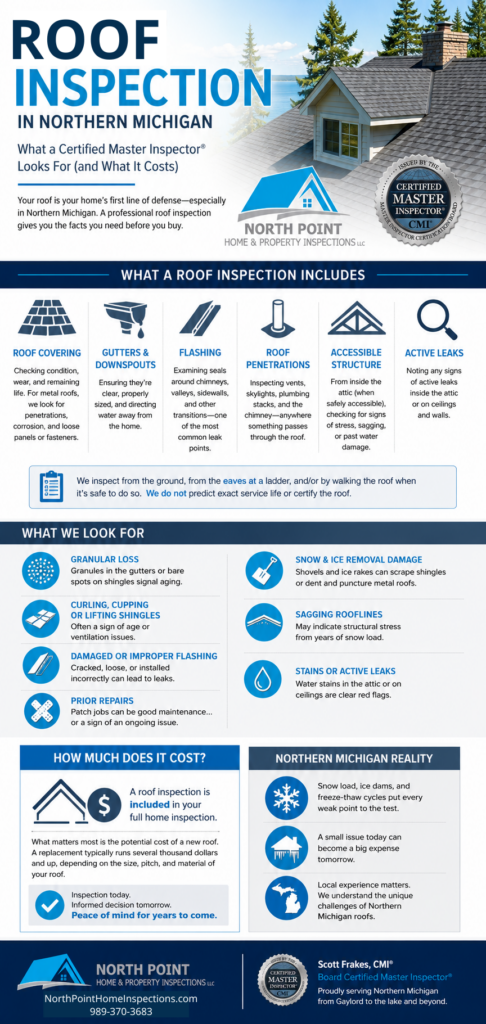
A roof inspection is a non-invasive, visual evaluation of a roof’s covering, drainage, penetrations, and accessible structure to identify defects and signs of active leaks.
A roof inspection is an essential part of a full home inspection. For a typical Northern Michigan home, it’s one of the most important parts. Up here, the roof takes more punishment than almost any other system in the house. The cost of getting it wrong runs into the thousands.
What Does a Roof Inspection Include?
During every roof inspection, I examine the parts of the roof system that can fail and let water into the home. Following the InterNACHI® Standards of Practice, that means inspecting from ground level or the eaves — and walking the roof when conditions allow — to evaluate:
- The roof covering. Most Northern Michigan homes have asphalt shingles, so I’m looking at their condition, wear, and how much life may be left in them. For metal roofs, I look for penetrations, corrosion, and loose or missing metal panels and/or fasteners.
- Gutters and downspouts. These move water away from the roof and foundation. When they’re clogged, undersized, or draining against the house, problems follow.
- Flashing. The metal or synthetic rubber seals around chimneys, valleys, sidewalls, and other transitions. Flashing is one of the most common places I find water intrusion.
- Roof penetrations. Vents, skylights, plumbing stacks, and the chimney — anywhere something passes through the roof is a spot worth close attention.
- The accessible roof structure. From inside the attic, as long as it can be safely reached, I check the underlying structure for signs of stress, sagging, or past water damage.
I describe the type of roof-covering material and report anything showing signs of an active leak.
What I don’t do is confirm how the roofing was fastened underneath, certify or warrant the roof, or predict an exact number of years it has left. Those aren’t things a visual inspection can honestly promise — and I won’t tell you otherwise.
What Do Home Inspectors Look for on a Roof?
Beyond the components themselves, I’m reading the roof for the story it tells. A few of the signs I pay closest attention to:
- Granular loss. Asphalt shingles are coated in protective granules. When they wash into the gutters, worn or bare spots appear. That’s a sign that the shingles are aging out.
- Curling, cupping, or lifting shingles. Often a sign of age, heat, and/or ventilation problems in the attic below.
- Damaged or improperly installed flashing. Flashing that sits on top of shingles instead of tucked underneath, or that’s cracked and pulling away, is an invitation for leaks.
- Prior repairs. Patch jobs aren’t automatically bad. They can actually be a good sign that the owner has maintained the home. However, a roof that’s been repaired many times can point to an ongoing problem that was never fully solved.
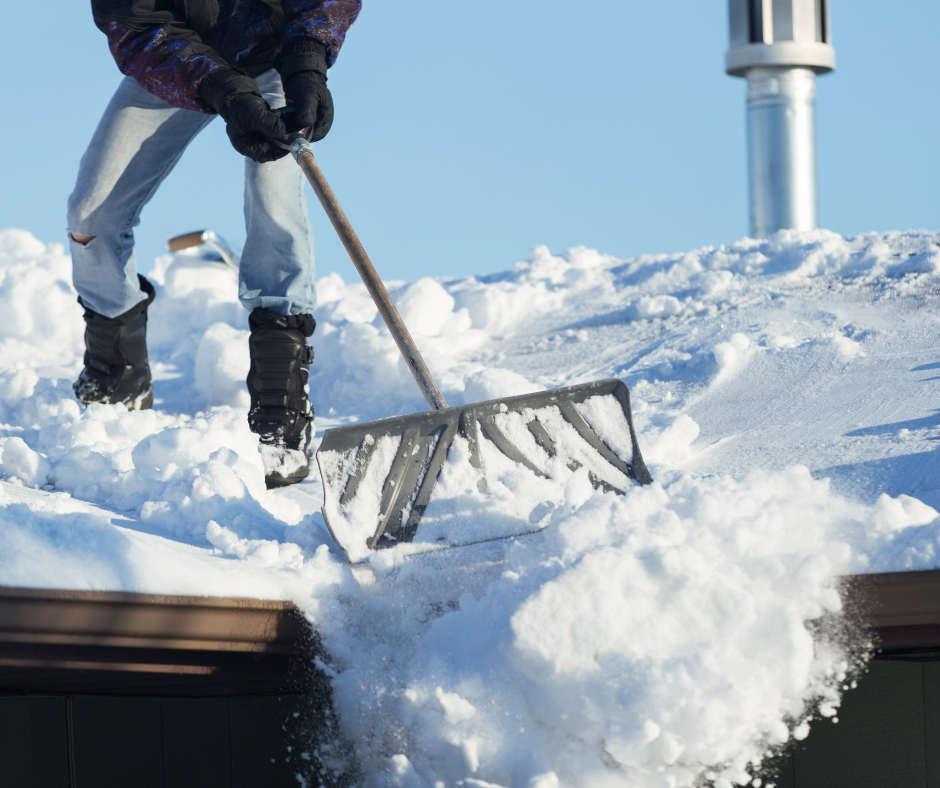
- Damage from snow and ice removal. Up here, clearing a roof is a fact of life — but shovels and ice rakes take a toll. On asphalt shingles I often see scraped granules and gouges; on metal roofs, dents and even punctures where a tool caught an edge. Well-meant winter maintenance can leave the roof more vulnerable than before.
- Sagging rooflines. A dip or wave in the roof can signal structural stress underneath — sometimes from years of snow load.
- Staining or active leaks. Water stains at the eaves, in the attic, or on ceilings are the clearest evidence that the roof isn’t doing its job.
How Much Does a Roof Inspection Cost?
For most buyers in Northern Michigan, you’re hiring an inspector for the whole house. The roof is part of that. The roof is inspected as part of a full home inspection rather than billed separately.
The number that matters more is what a roof itself costs if it needs replacing. Most roofing contractors here in northern Michigan charge from $15-25K or more to replace a roof, depending on the size of the roof, how steep it is, the type of roof covering, and how many stories the home has.
When you weigh the cost of a new roof against the cost of the inspection, the math is straightforward: an inspection is a small fraction of what a roof replacement runs, and it tells you which one you’re walking into before you commit.
Why Roof Age Matters So Much for Buyers
If there’s one roof question worth asking before you buy, it’s this: how old is it, and how much life is left?
An asphalt shingle roof has a limited lifespan, and a roof near the end of that window is a genuine financial consideration — not a reason to panic, but a number to factor into your offer.
When I find a roof that’s aging out, that’s information you can use. Real estate buyers and agents regularly use roof condition as a point in negotiations, whether that means asking the seller to address it, adjusting the offer, or simply going in with clear eyes and a plan to budget for replacement.
This is also where roof age meets the appraisal. A roof in poor condition can affect how a home appraises and how a lender views it, so it’s not only your concern as the buyer — it can shape the financing too.
Northern Michigan Roofs Take a Beating
Roofs here live a harder life than roofs almost anywhere else in the country. Three forces do most of the damage:
Snow load. A winter’s worth of accumulated snow puts enormous, sustained weight on a roof. A properly built and pitched roof sheds and carries that load; a compromised one shows the strain. The 2025 Northern Michigan ice storm and the ice events that followed were a stark reminder of just how much our roofs are asked to handle.
Ice dams. When heat escaping into the attic melts snow that then refreezes at the cold eaves, water backs up under the shingles and into the home. Ice dams are one of the most expensive roof-related problems I see up here. I’ve written a full guide to ice dam warning signs if you want to go deeper.
Freeze-thaw cycles. Our temperatures swing across the freezing point again and again through the season. Each cycle works at small cracks and weak seals, widening them over time until they leak.
Because the roof and the attic work together — ventilation and insulation below drive much of what happens above — a roof inspection connects closely to what I find in the attic. You can read more about that in my guide to what a home inspector looks for in the attic.
Frequently Asked Questions
Does a home inspector check the roof?
Yes. The roof is a standard part of a full home inspection. I inspect the roof covering, gutters, downspouts, flashing, penetrations, and the accessible roof structure, and I report signs of active leaks.
Do home inspectors walk on the roof?
Sometimes. I walk a roof when it can be done safely and without damaging the covering. When a roof is too steep, too high, wet, snow-covered, or fragile, I inspect it from the ground and from a ladder at the eaves instead, as described in the InterNACHI Home Inspection Standards of Practice. Safety and the condition of the roof both factor into that call.
How long does a roof inspection take?
The roof portion is one part of a full home inspection, not usually a separate appointment. The time depends on the size and complexity of the roof and whether it can be walked, but it’s a thorough look rather than a quick glance.
How often should you have your roof inspected?
For homeowners, having the roof looked at periodically — and after major storms — helps catch small problems before they become expensive ones. For buyers, a roof inspection as part of your home inspection before closing is the key moment to know what you’re getting.
Can a roof inspection predict exactly how many years the roof has left?
No. A visual inspection describes the roof’s current condition and signs of wear, but it doesn’t certify the roof or promise an exact service life. Any inspector who guarantees a precise number of years is overselling what an inspection can do.
Schedule Your Northern Michigan Roof Inspection
Your roof is the first thing standing between your home and a Northern Michigan winter. Before you buy, knowing its real condition — its age, its wear, and whether it’s ready for the seasons ahead — is some of the most valuable information a home inspection gives you.
As a Board Certified Master Inspector® serving Gaylord, Petoskey, Charlevoix, Boyne City, East Jordan, Harbor Springs, Traverse City, and the surrounding communities, I’ll give you a clear, honest read on the roof and the rest of the home. Reach out to North Point Home & Property Inspections to schedule your inspection, or call/text me directly at (989) 370-3683.

Scott Frakes, CMI® has completed more than 2,000 inspections throughout Northern Michigan and brings decades of construction and inspection experience to every property evaluation.
Scott Frakes, CMI® Certified Master Inspector® | InterNACHI Certified Since 2013 North Point Home & Property Inspections, LLC | Gaylord, MI