
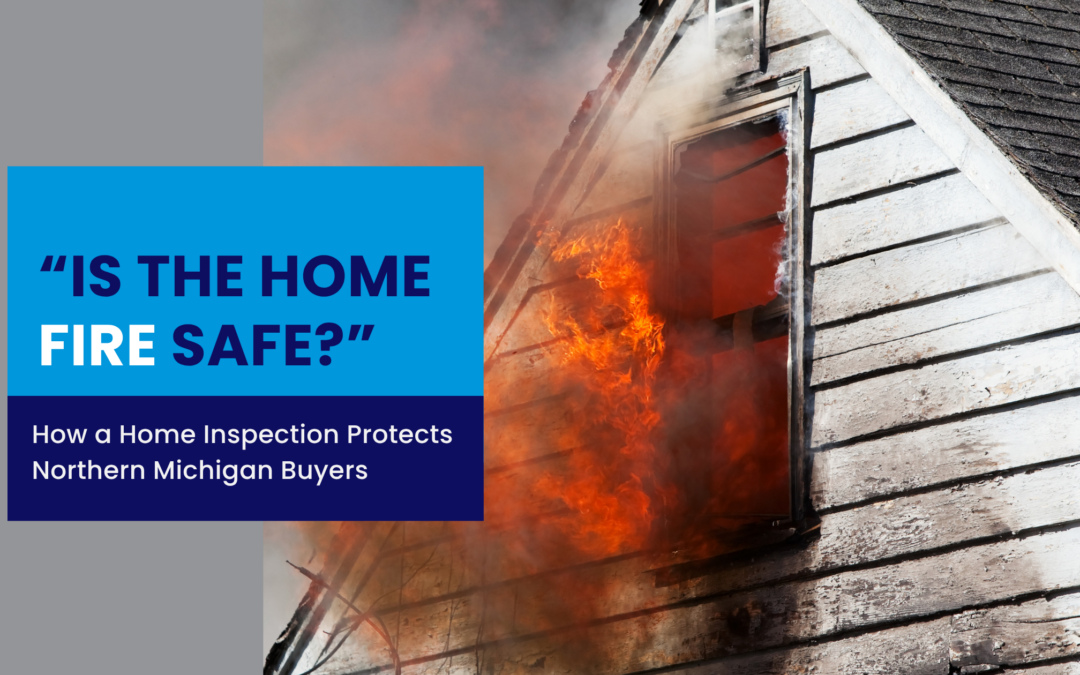
Buying a home is thrilling right up until the moment you lie awake wondering what you cannot see behind the walls. For a lot of buyers I work with, the fear that keeps coming back is fire.
“Is the wiring safe? Could that old panel in the basement be a problem? Is the wood stove in the living room a cozy feature or a hidden risk?” Those are some of the most common worries I hear, and they are completely reasonable. A house fire is one of the few things that can take everything at once.
Here is the reassuring part: most of what causes house fires is visible, findable, and fixable, and finding it is a big part of my job.
I’m Scott Frakes, a Certified Master Inspector® based in Gaylord, and I have inspected homes across Northern Michigan for more than a decade. My goal here is simple: to replace worry with knowledge. Below is a plain-English look at what a home fire safety inspection covers, how it differs from the fire inspection you may be picturing, and why it matters so much in all Northern Michigan homes, but especially in older ones.
What is a home fire safety inspection?
A home fire safety inspection is the part of a professional home inspection that looks at what is most likely to start or spread a fire. That means the electrical system, heating equipment, wood stoves and chimneys, dryer venting, and smoke and carbon monoxide alarms.
If you are buying a home in Northern Michigan, this is one of the most important things I check, and it is often where I find problems a buyer would never spot on a walk-through.
Do home inspectors check for fire hazards?
Yes, and this is exactly where a good inspection earns its keep. A general home inspection is not a fire-code inspection, but a thorough one covers the conditions that cause house fires. When I inspect a home, I document the electrical service and panel, the wiring I can reach, the heating equipment, any wood-burning appliances, the dryer vent, and the smoke and carbon monoxide alarms.
My job is to describe what I find, not to hand out a pass or fail grade or to scare you off a house. If I see an unsafe panel or wiring that was never updated, I document it clearly and explain it in plain terms. Then you can bring in a licensed electrician and make an informed decision before you buy, instead of finding out the hard way later.
What fire hazards does a home inspection find?
Most fire-related issues I document fall into a handful of categories. None of these should send you running from a home you love. They are simply things you deserve to know about before you sign. Here is what I am looking at.
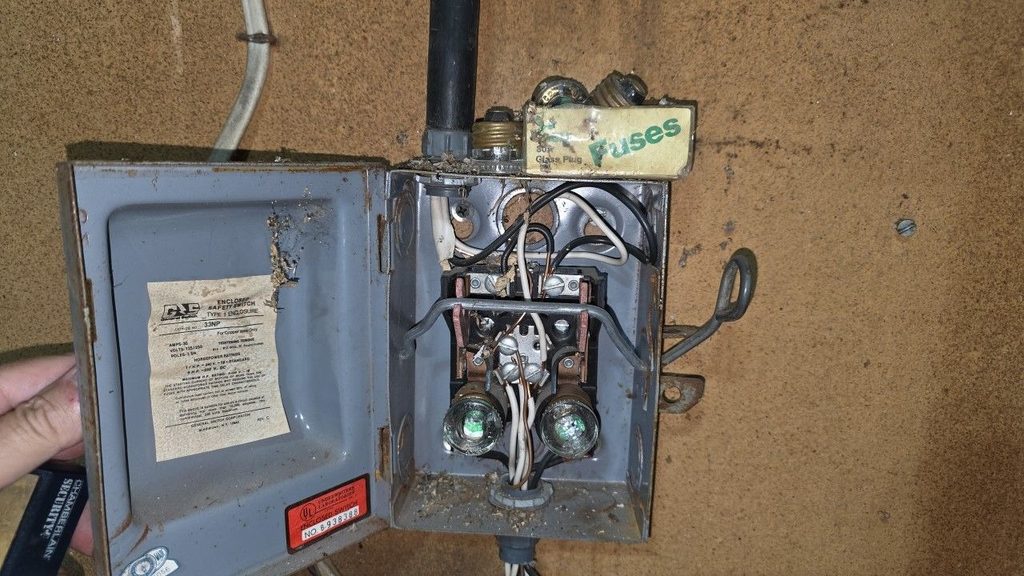
Outdated or unsafe electrical panels. Some panel brands have a long, documented history of problems and are widely considered unsafe. Federal Pacific, Zinsco, Pushmatic, and certain Sylvania panels are the ones I flag most often. I go into much more depth on what a home inspector looks for during an electrical panel inspection in a separate post. Fuse boxes also show up regularly in older Northern Michigan homes. When I find any of these, I note it so an electrician can evaluate it.
Older wiring that was never updated. Knob-and-tube wiring, cloth-covered wiring, and aluminum branch wiring were all common in their day, and plenty are still in service. Each carries its own concerns. In my experience in markets like ours, roughly 30% of older homes still have wiring or a panel that has never been updated. That figure climbs closer to 80% once you count homes with one or more ungrounded outlets. Northern Michigan has a lot of older and seasonal homes, so this comes up constantly.
Wood stoves, fireplaces, and chimneys. Heating season is long up here, and wood heat is everywhere. I look at the clearances from the stove to nearby combustible materials, the condition of the flue and chimney, and signs of creosote buildup. Creosote is the leading cause of chimney fires. Improper clearances and neglected chimneys are common findings.
Dryer venting. A lint-clogged or improperly routed dryer vent is a genuine fire risk that most people never think about. I check the vent path and termination when they are accessible.
Missing or aged smoke and carbon monoxide alarms. I note alarms that are missing, expired, or placed where they will not do their job. These are inexpensive to fix and save lives.
What about an attached garage?
An attached garage is one of the spots I pay closest attention to during a home fire safety inspection. That’s because it sits right next to your living space and holds the most flammable materials in most homes: gasoline, oil, paint, and propane.
The shared wall between the garage and your house is your main line of defense, and it is supposed to buy your family time in the event of a garage fire. That is why the wall and ceiling facing the living area should be finished and taped with fire-rated drywall, and the door between the garage and the house should be solid or fire-rated, self-closing, and sealed tight against gaps.
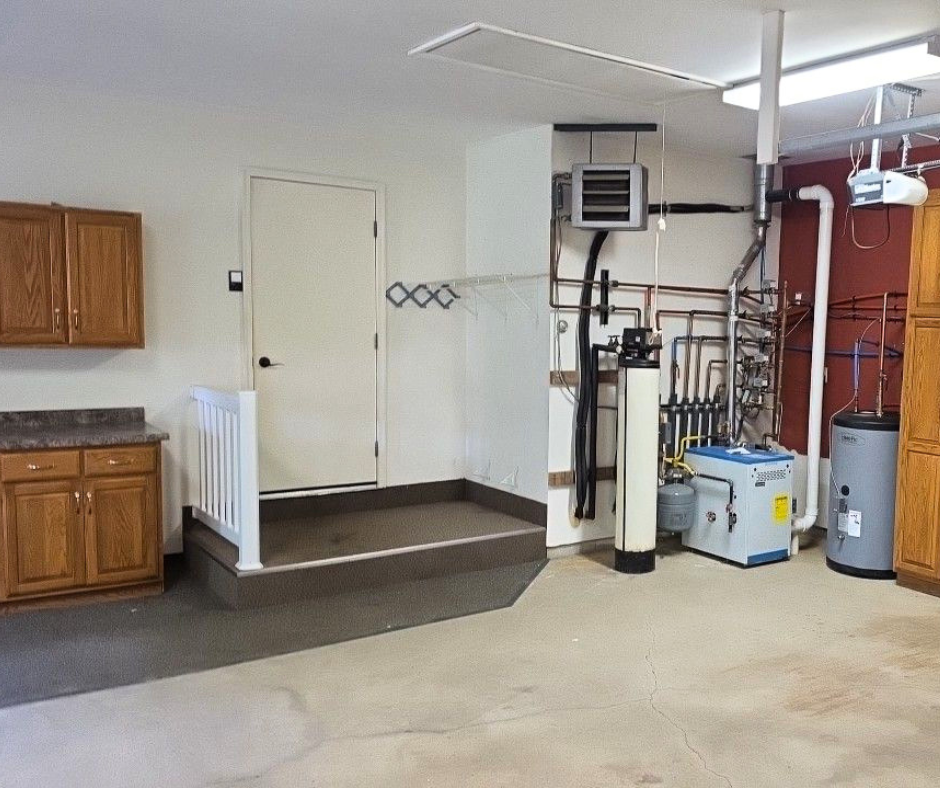
In older Northern Michigan homes, I often find standard drywall (or worse: flammable materials such as OSB or paneling), unfinished walls, or a connecting door that no longer latches on its own. I also flag any pet door cut into that connecting door, since it undoes the very fire separation the door is meant to provide. None of these are reasons to panic, but each is worth knowing about before you buy.
Home fire safety inspection vs. fire department inspection: what is the difference?
This trips up a lot of buyers, so it is worth clearing up.
A fire department inspection is usually a compliance check. It applies to rentals, commercial buildings, and certain multi-unit properties, and it ends in a pass or fail against local fire code. If you have wondered why a fire inspector would visit a property or how to pass that kind of inspection, that is the municipal process. It is not what happens when you buy a single-family home.
A home fire safety inspection is the fire-focused part of the general home inspection you order as a buyer or homeowner. There is no pass or fail. My role is to document conditions and give you clear, honest information, so you know what you are buying (or living in) and what to address.
One is about code compliance. The other is about what you know as a buyer or homeowner.
How often should you get a home fire safety inspection?
For most people, a home fire safety inspection happens at a natural decision point rather than on a fixed schedule.
If you are buying a home, you order the inspection before closing. This is the biggest group I work with, and for good reason: it is your one clear chance to understand the home’s fire risks and other overlooked home safety hazards common in northern Michigan before the property is yours.
If you are selling, a pre-listing inspection lets you find and address problems on your own terms instead of during negotiations.
If you already own your home, no rule says you need a periodic inspection. Still, it is worth having the electrical system, heating equipment, chimney, and means of egress evaluated if:
- The home is older
- You are getting older or expecting children and concerned about improving fire safety
- You have never had them looked at, or
- You have noticed warning signs.
Those signs include breakers that trip again and again, outlets that feel warm, or lights that flicker. Many of my clients just bought an older home and want to understand what they are dealing with.
Can a home fire safety inspection lower your homeowner’s insurance?
Sometimes, indirectly. Insurers care a great deal about a home’s fire risk. Some of the conditions I document, especially older wiring, unsafe panels, and garage firewalls, are exactly the things that can affect whether a policy is offered or what it costs. Fixing those issues before or shortly after you buy can put you in a better spot with your insurer.
I want to be straight with you, though. I do not set insurance rates, and every carrier weighs these factors differently. What I can do is give you the documented information you and your agent need to have that conversation. From there, you can make solid decisions in negotiation and fire prevention in your home.
Who should you hire for a home fire safety inspection in Northern Michigan?
Fire hazards hide in the details, so experience matters. Look for an inspector who knows local housing stock, explains findings clearly, and holds strong credentials.
As a Certified Master Inspector®, I hold the top professional designation in the inspection industry. I have spent well over a decade inspecting homes throughout Northern Michigan, including Gaylord, Petoskey, Harbor Springs, Charlevoix, Traverse City, and the surrounding communities. I understand how homes in our region are built. I also know how our long heating season and older homes create fire risks that a less experienced inspector can miss.
If you are buying or selling a home and that quiet worry about fire is nagging at you, let me help you trade it for a clear, honest picture of the house. That peace of mind is the whole point. Call or text me at (989) 370-3683 to schedule your inspection.

Scott Frakes, CMI® has completed more than 2,000 inspections throughout Northern Michigan and brings decades of construction and inspection experience to every property evaluation.
Scott Frakes, CMI® Certified Master Inspector® | InterNACHI Certified Since 2013 North Point Home & Property Inspections, LLC | Gaylord, MI