
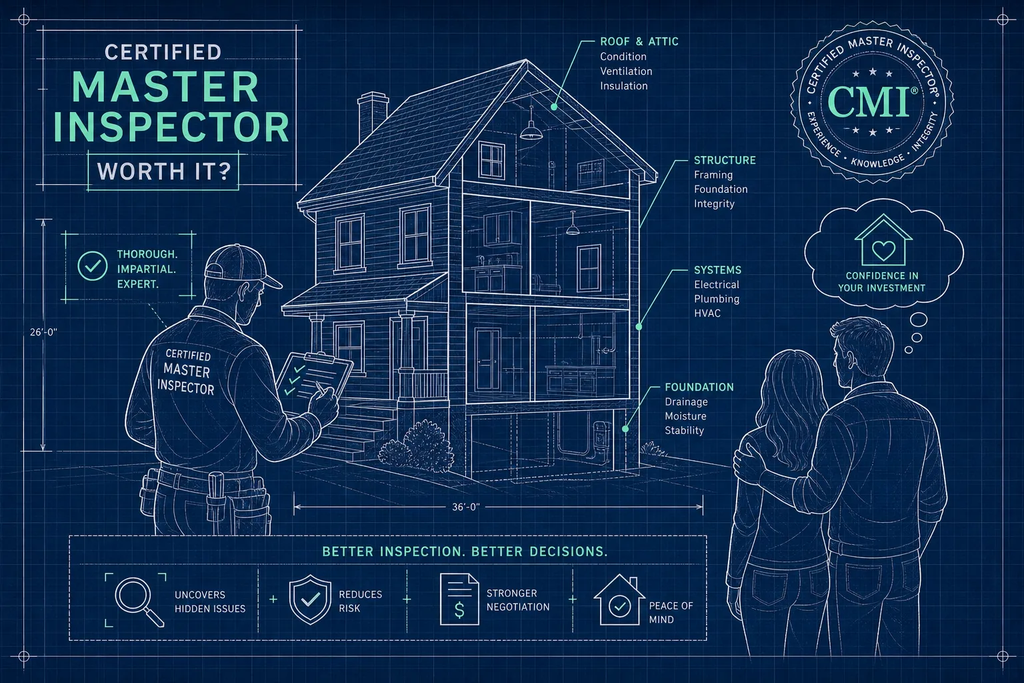
Is a certified master inspector worth it when buying a home? For most Michigan buyers, yes.
The reason is simple: Michigan doesn’t license home inspectors. There’s no state exam, no required training, and no state board. That means anyone can call themselves a home inspector. A Certified Master Inspector® (CMI®) designation is one of the few ways you can confirm an inspector’s experience before you hire them.
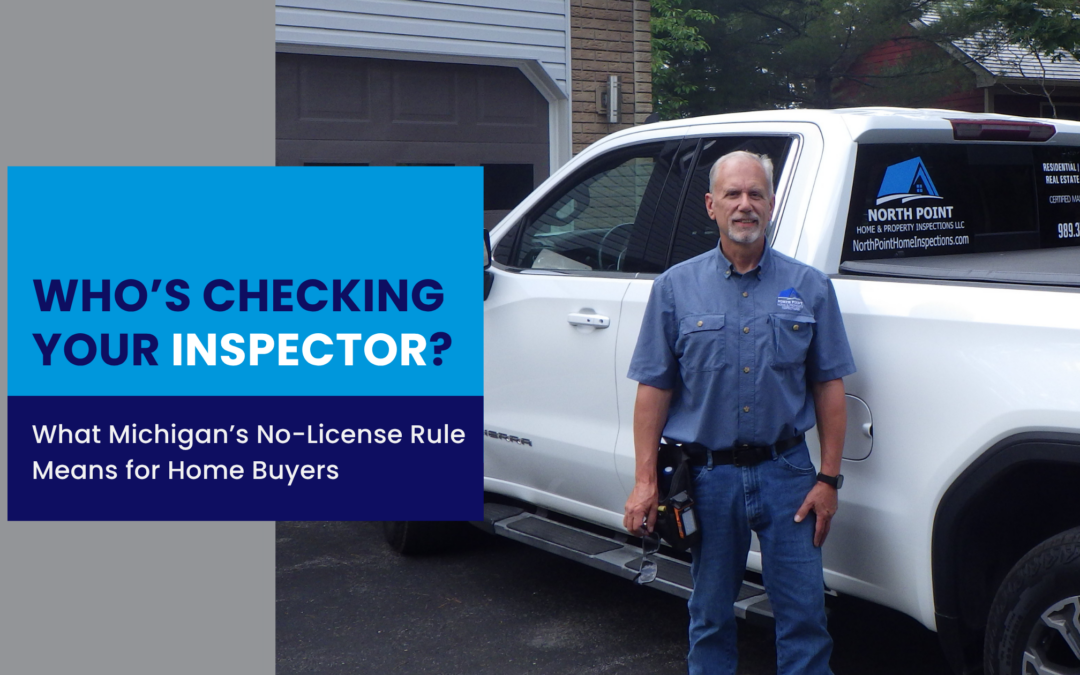
I’m Scott Frakes, CMI®, owner of North Point Home & Property Inspections in Gaylord. I’ve completed more than 2,000 inspections across Northern Michigan over the past 12-plus years. In this post, I’ll explain what the CMI® designation means, when it matters most, and when a standard inspector may be all you need.
What does the Certified Master Inspector® designation mean?
The CMI® is a professional designation awarded by the Master Inspector Certification Board. It’s not a state license. Inspectors earn it voluntarily, and that’s part of why it carries weight.
To earn it, every Certified Master Inspector® must:
- Complete at least 1,000 fee-paid inspections and/or hours of education (combined)
- Work in the inspection business for at least three years
- Agree to the inspection industry’s toughest Code of Ethics
- Agree to periodic criminal background checks
According to the Master Inspector Certification Board, only a small minority of inspectors hold the designation. It’s considered the inspection industry’s top professional credential.
I’ve also earned more than 24 inspection certifications through InterNACHI, the world’s largest inspector training and certification organization. Before inspecting, I studied mechanical engineering at Lake Superior State University. I’ve also held a Michigan Builder’s License since 1997, so I understand how homes are built from the ground up.
Does Michigan require home inspectors to be licensed?
No. Michigan is one of a shrinking number of states that doesn’t license home inspectors. There’s no required training, no state exam, and no continuing education.
There is also no state licensing board to call if something gets missed. You may still have other options, such as the attorney general’s consumer protection office or the courts. But those only help after the fact.
That puts the job of vetting your inspector on you. A credential like the CMI® gives you something concrete to check. You can verify any Certified Master Inspector® on the CMI® website in a minute or two.
When is a Certified Master Inspector® clearly worth it?

The CMI® earns its keep when the home or your situation raises the stakes. Here are the cases where I see experience make the biggest difference.
Which homes benefit most from a CMI® inspection?
- Older homes. Homes built before 1950 often have aging wiring, older plumbing, and foundations that have weathered decades of freeze-thaw cycles. Updates can hide problems underneath. It takes experience to tell cosmetic work from real concerns.
- Homes with signs of moisture or foundation trouble. These need a careful eye and clear documentation.
- Lakefront and seasonal homes. Northern Michigan winters are hard on houses that sit empty for months. Ice dams, frost heave, and moisture problems are common.
- Custom or high-end homes. More complex systems mean more places for problems to hide.
Which buyers benefit most?
- First-time buyers. I walk you through what I find on-site, so you’re not left to decode a report alone.
- Out-of-area buyers. If you’re buying a vacation home or lakefront property here, our climate may be new to you. Ice dams and frost heave don’t always look like warning signs to someone from a warmer place.
- Investors. You need a clear record of the property’s condition so you can get contractor quotes and decide if the deal makes sense.
- Buyers on a tight timeline. When contingency deadlines are close, a fast and thorough report matters.
What does a CMI® inspection actually give you?
The credential is only part of it. The real value shows up in the report and how it’s delivered.
What makes an inspection report useful?
A good report is easy to read and full of photos. It shows you exactly what was found and where. It also explains what each finding means and whether you should call a specialist.
Specific, documented findings help you in negotiations. “Roof has wear” doesn’t give you much to work with. A report that shows exactly where the damage is, with photos, gives you something real to bring to the table.
I’ll also be upfront about limits. For example, snow cover can keep me from inspecting a roof during a winter inspection. When that happens, I tell you during the inspection and note it in the report, so there are no surprises.
How fast will I get my report?
Speed matters when you’re working against a contingency deadline. I’m proud of my report turnaround. Reports are typically delivered same-day or within 24 hours, which gives you more time to make decisions before your deadlines.
What add-on testing is available?
Some concerns go beyond what a standard home inspection covers. These services are available as add-ons for an additional fee. They are not part of a standard home inspection:
- Thermal imaging
- Radon testing
- Mold testing
- Sewer scopes
- Well water testing
These tests can confirm problems a visual inspection can’t. They can also give you solid evidence to support a repair request. Some may be required by your lender, so be sure to check with them before ordering an inspection.
Does a Certified Master Inspector® cost more?
Not necessarily. Inspection fees depend on many things, such as the home’s size, age, and type, plus any add-on tests you choose. A CMI® isn’t automatically the most expensive option. I keep my pricing competitive, and many of my clients have told me my rates were very reasonable.
The better question is what you get for the fee. Compare these things side by side:
- Verified experience and credentials
- What’s included in the inspection
- Report quality and turnaround time
- Available add-on testing
- Insurance coverage
The cheapest inspection isn’t a bargain if it misses something important. In a state with no licensing floor, it pays to look at the whole picture.
What should I ask before hiring a home inspector?
Good news: you can find answers to most of these questions on a good inspector’s website. A professional inspector should make this information easy to find. Check the website first, then call with anything that’s still unclear.
- How long have you been inspecting, and about how many inspections have you completed?
- What certifications do you hold, and can I verify them?
- What’s included in the inspection, and what’s excluded?
- Do you carry errors-and-omissions insurance?
- How quickly will I get my report?
- What add-on testing do you offer?
If an inspector’s website leaves most of these blank, that’s worth noticing. These questions apply to every inspector you consider, CMI® or not.
When is a standard home inspector enough?
Honestly, not every purchase needs a CMI®. If you’re buying a newer home with easy-to-reach systems, no signs of moisture or structural trouble, and a simple transaction, a qualified, well-reviewed inspector may give you what you need.
The real question isn’t CMI® versus non-CMI®. It’s whether your inspector has:
- Verified experience with homes like yours
- Proper insurance
- A clear, well-documented report
- The patience to explain findings on-site
In Michigan, nobody checks those things for you. You have to check them yourself.
The bottom line for Northern Michigan buyers
So, is a certified master inspector worth it when buying a home in Michigan? For most buyers, yes. With no state licensing, the CMI® is one of the clearest signs that an inspector has earned their experience rather than just claimed it.
It matters most for older homes, lakefront and seasonal properties, and anyone new to Northern Michigan’s climate. Freeze-thaw cycles and long winters create problems many buyers don’t know to look for. It’s also worth mentioning that even newer homes can have issues that may not be obvious to inexperienced eyes.
Frequently asked questions
Is a certified master inspector worth it when buying a home in Michigan?
For most Michigan buyers, yes. This is especially true for older homes, lakefront properties, and complex homes. Michigan doesn’t license home inspectors, so the CMI® designation is one of the few ways to verify an inspector’s experience before you hire them.
What is the difference between a Certified Master Inspector® and a regular home inspector?
A Certified Master Inspector® has at least three years in the business and at least 1,000 combined fee-paid inspections and/or education hours. They have also agreed to a strict code of ethics and periodic criminal background checks. A regular inspector in Michigan isn’t required to meet any minimum standard.
Does a CMI® inspection cost more?
Not always. Fees depend on the home’s size, age, and type, and on any add-on testing. Compare what’s included, how fast you’ll get the report, and the inspector’s verified experience, not just the price.
Does Michigan require home inspectors to be licensed?
No. Michigan doesn’t license home inspectors, and there’s no state-required training or exam. That makes checking an inspector’s credentials and experience especially important.
Ready to work with a Certified Master Inspector®?
Buying a home is a big decision. In Michigan, the law doesn’t vet your inspector for you. That’s why credentials and experience matter so much.
As a Certified Master Inspector®, I bring more than 2,000 inspections, 24+ specialized certifications, and 12-plus years of Northern Michigan experience to every home. I know how our long winters, freeze-thaw cycles, and lakefront conditions affect houses here. I’ll walk you through what I find on-site, answer your questions, and get you a clear, photo-rich report fast.
I serve Gaylord, Petoskey, Charlevoix, Boyne City, Harbor Springs, East Jordan, Grayling, and the communities in between.
Call or text me at (989) 370-3683, or schedule your inspection online. I’ll help you know exactly what you’re buying before you close.

Scott Frakes, CMI® has completed more than 2,000 inspections throughout Northern Michigan and brings decades of construction and inspection experience to every property evaluation.
Scott Frakes, CMI® Certified Master Inspector® | InterNACHI Certified Since 2013 North Point Home & Property Inspections, LLC | Gaylord, MI