

A Certified Master Inspector’s Guide to Attic Inspection in Northern Michigan
The attic is one of the most revealing spaces in any home. In my experience performing more than 2,000 inspections across Northern Michigan, I’ve found that the attic tells the story of a home more honestly than almost any other area. Here’s where we find past leaks, undisclosed fire damage, DIY shortcuts, and moisture problems quietly building for years. It’s also the place where some of the most expensive issues hide in plain sight, visible only to someone who knows what to look for.
A thorough attic inspection isn’t a quick scan with a flashlight. It’s a systematic evaluation of structural members, insulation, ventilation, moisture, and more — all of it viewed through the lens of Northern Michigan’s climate, where cold winters, heavy snowfall, and freeze-thaw cycles create conditions you won’t find in the Southeast or on the West Coast.
Here’s exactly what I look for during an attic inspection, and why it matters.
What Does a Home Inspector Look for in the Attic?
According to InterNACHI’s Standards of Practice, a home inspector is required to:
- Inspect the insulation in unfinished spaces
- Check for the presence of attic ventilation, and
- Inspect mechanical ventilation systems.
But those are the minimums. What I actually do goes considerably further — not because I’m required to, but because the attic genuinely warrants it.
Here’s what a complete attic inspection covers.
Attic Access
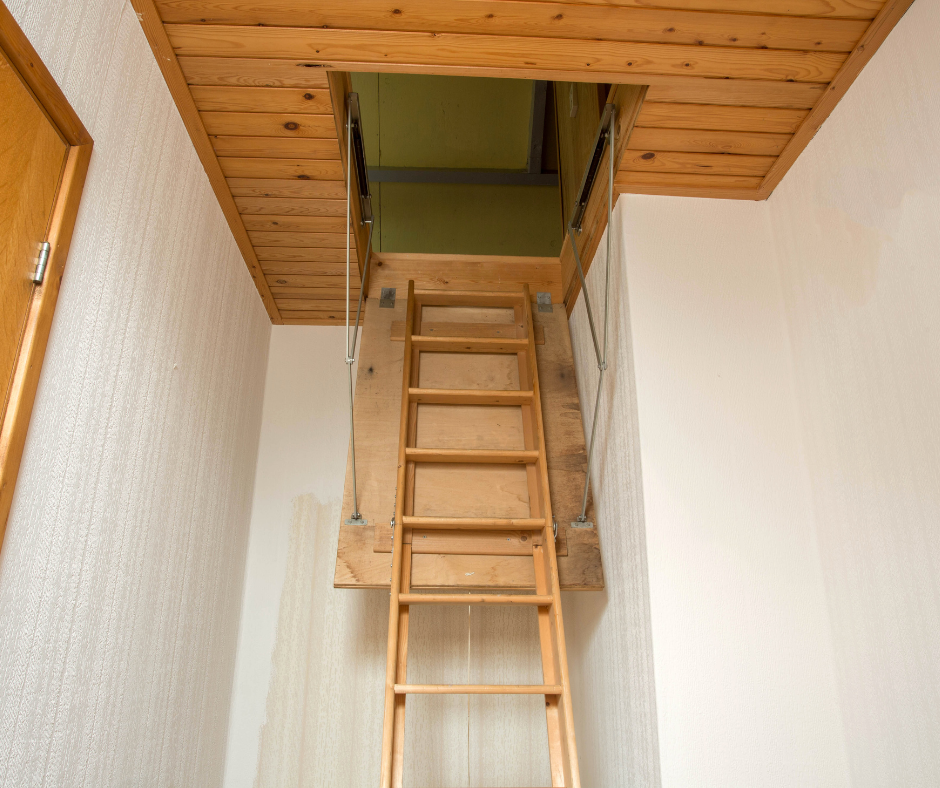
Before I can inspect the attic, I have to get into it — and the attic access point itself is an inspection item.
Most homes use either a scuttle hatch or a pull-down stair. Both tell me something right away. A hatch with no insulation or weatherstripping is essentially a hole in your building envelope. Every time your heating system runs, conditioned air migrates into the attic space above. It’s a small thing with a measurable impact on your energy bill.
Pull-down stairs deserve extra attention. The majority of them are installed by homeowners rather than carpenters, and it shows. The most common problems I find include:
- Wrong fasteners — such as drywall screws instead of the specified 16d penny nails or lag screws. Drywall screws are easy to find and inexpensive, but they have reduced shear strength and can fail under load.
- Ladder cut too short — these stairs are designed to be supported by the floor. If they don’t reach, the weight transfers to the hinges, which is a structural failure waiting to happen.
- Ladder cut too long — this puts stress on the folding hinges and can cause them to snap over time.
- Structural truss cut during installation — homeowners sometimes cut through a structural member to create the opening, which compromises the roof framing.
If the pull-down stair feels wobbly or the frame is pulling away from the ceiling, I’ll note it. These are safety issues, not cosmetic ones.
Structural Members
Once I’m in the attic, the framing is the first thing I evaluate. Trusses and rafters carry the weight of your roof, and they’re only visible from the attic — you can’t assess them from below.
Most of the time, everything looks as expected. But over 12 years of inspections in Northern Michigan, I’ve seen things that wouldn’t be obvious from anywhere else in the home. To name a few:
- Trusses that were cut to accommodate a whole-house fan or a vent pipe — a modification that weakens the structure and, over time, causes the roof to sag.
- Charred wood with or without rafter repairs made with lumber nailed over — evidence of a past fire that was never disclosed and never properly remediated.
- Rafters spaced too far apart or with too small dimensions for our climate and snow load.
- Sagging or broken members from decades of heavy snow load, particularly on older homes with roofs that weren’t designed to current standards.
Nailing new lumber over compromised framing is not a repair — it’s a cover-up. Any modification to structural roof framing should be evaluated by a structural engineer before it’s considered acceptable.
Attic Insulation Inspection
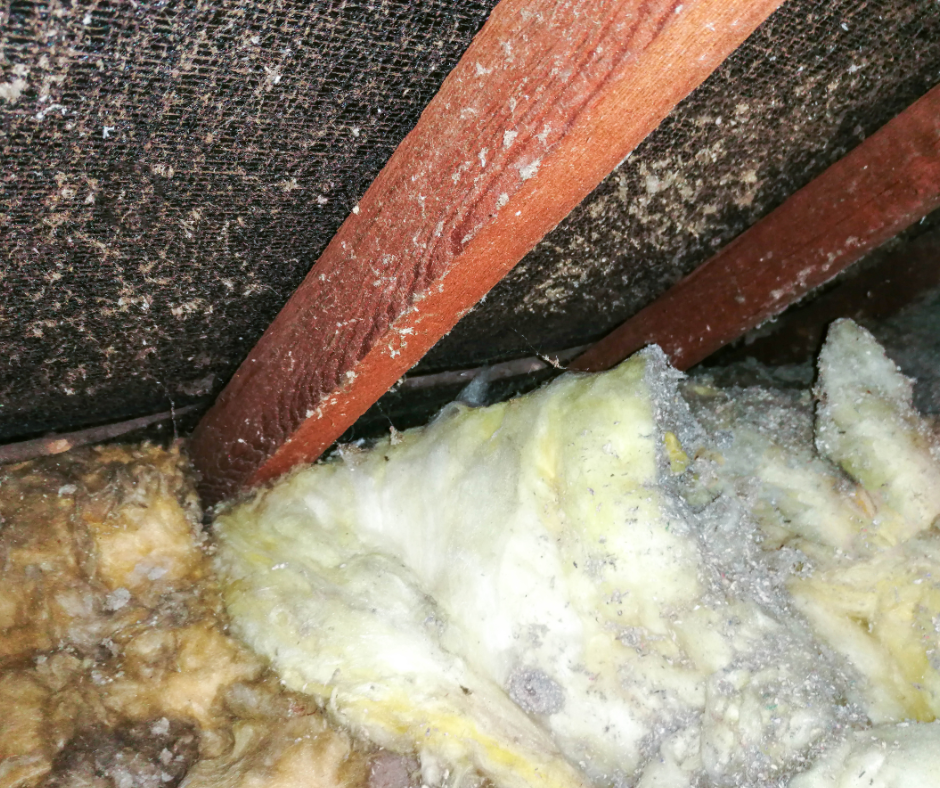
Insulation is one of the most important parts of the attic inspection. It’s also one of the most commonly deficient areas I find — especially in older Northern Michigan homes.
Northern Michigan falls in Climate Zone 6 under building energy codes. The U.S. Department of Energy recommends attic insulation of R-49 to R-60 for this zone. Many of the homes I inspect fall well short of that. Some have insulation that’s been damaged, compressed, or improperly installed on top of the existing layer.
What I’m evaluating during the attic insulation inspection:
- Type and depth — blown cellulose, fiberglass batts, spray foam, or a combination; I estimate depth and R-value where visible.
- Coverage — insulation should extend evenly across the attic floor, including the back corners and hard-to-reach areas where it commonly falls short.
- Condition — wet, compressed, or disturbed insulation has lost R-value; I look for signs of water damage, pest activity, or compression from storage.
- Thermal bridging — insulation should cover the tops of the floor joists to prevent heat from escaping through the framing.
- Baffles at the eaves — these maintain the airflow channel between the insulation and the roof deck; without them, insulation can block soffit vents and create moisture problems.
One thing worth noting: A home inspector is not required to identify exact R-values or move insulation. What I can do is give you an informed assessment of whether what’s there appears adequate for this climate, and flag areas that warrant further attention.
Attic Ventilation Inspection
Attic ventilation is the part of the attic inspection that most homeowners don’t think about — until they have a problem.
A properly ventilated attic requires balanced airflow: cold air enters at the soffit vents at the eaves, moves up through the attic, and exits at the ridge or gable vents near the peak. This continuous airflow serves two critical functions in Northern Michigan:
In winter, proper ventilation keeps the roof deck cold and consistent, which is the single most effective way to prevent ice dams. When heat from the living space escapes into the attic and warms the roof deck unevenly, snow melts at the top and refreezes at the cold eaves. That’s how roof-damaging ice dams form — and the attic is ground zero for where the problem starts. For a deeper look at what ice dam damage actually looks like inside a home, see my post on ice dam damage signs Northern Michigan homeowners miss.
In summer, ventilation removes heat buildup that would otherwise shorten the life of your roofing materials and force your HVAC system to work harder.
During the attic ventilation inspection, I’m checking:
- Whether both intake (soffit) and exhaust (ridge or gable) vents are present and unobstructed.
- Whether insulation is blocking the soffit vents — a common problem, especially with blown-in insulation.
- The condition of any mechanical ventilation (turbine vents, powered fans) — these require regular maintenance and can actually cause pressure problems if they’re pulling conditioned air out of the living space.
- Whether dryers and bathroom exhaust fans are properly vented to the exterior — a surprising number vent directly into the attic, which introduces significant moisture.
Moisture, Water Intrusion, and Mold
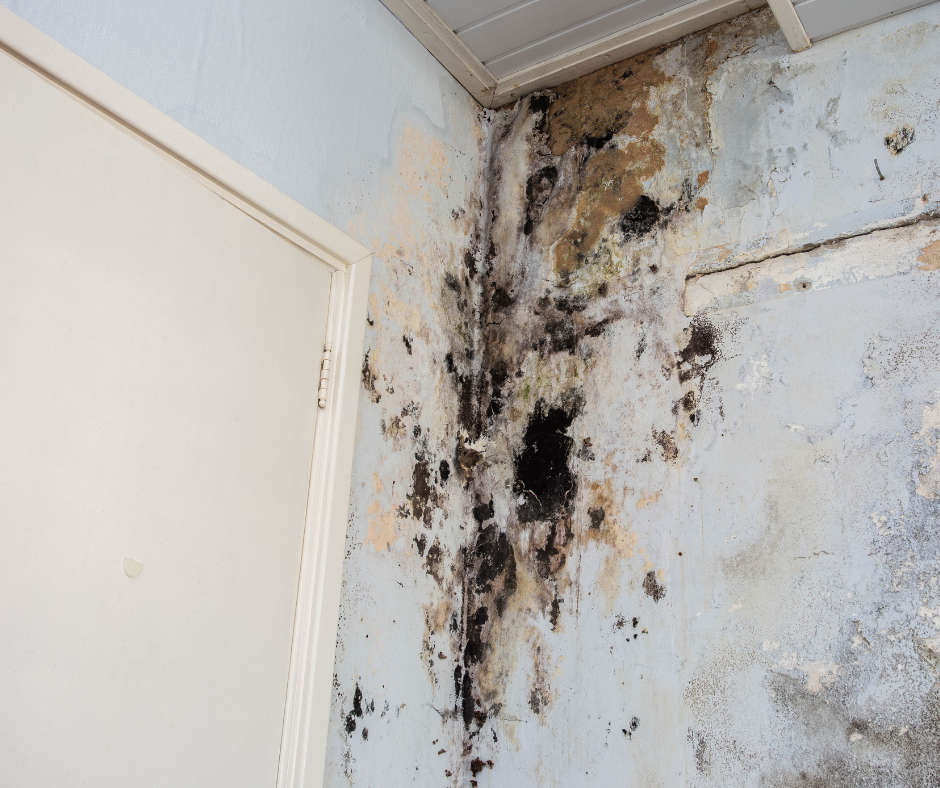
Water and attics have a complicated relationship. Finding evidence of it is one of the most valuable things an attic inspection can do for a buyer or homeowner.
I’m looking for:
- Water staining on the roof decking — discoloration, dark spots, or staining around roof penetrations like chimneys, vent pipes, and skylights.
- Soft or spongy roof decking — a sign of rot that’s progressed beyond staining.
- Rust on nails or metal components — an indicator of chronic moisture exposure.
- Active condensation — more common in winter, when warm, moist air from the living space meets the cold roof deck.
- Mold growth — Northern Michigan’s humidity levels and temperature swings create conditions where attic mold can develop quickly. This is especially true when ventilation is inadequate, or a bathroom fan has been venting into the attic for years.
When I find mold in the attic, I note it in the report and recommend professional mold testing to confirm the species and extent. What looks like a small colony on the surface of the sheathing can be a much larger problem once it’s tested. If you’re concerned about mold in your home, North Point also offers professional mold testing services.
A note on chimneys: The chimney chase is another area I check carefully in the attic. A masonry chimney must have intact mortar at the point where it penetrates the roof. Cracks or gaps can allow carbon monoxide to escape into the living space. Metal chimneys require a two-inch clearance from wood framing components. Many older homes predate the codes that govern this, which means they may have been built in a way that wouldn’t be approved today.
Electrical and Mechanical Components
Not every attic has electrical or mechanical equipment in it, but many do. When they do, those components fall within the scope of an attic inspection.
During an attic inspection, I’m checking for:
- Exposed or improperly spliced wiring — attics see more than their share of DIY electrical work. Issues like junction boxes that aren’t properly covered or wiring that’s been spliced without connectors are fire hazards.
- Knob-and-tube wiring — older homes in Northern Michigan sometimes still have this. It’s not inherently dangerous, but insulation cannot be installed directly over it, which affects the attic insulation inspection.
- HVAC ductwork — if ducts run through the attic, they should be insulated and free of damage. Crushed or disconnected ductwork affects the efficiency of your whole heating and cooling system and is easy to miss from anywhere other than the attic.
FHA and VA Attic Inspection Requirements
If you’re financing a home with an FHA or VA loan, the attic inspection matters in a specific additional way. Common flags that can affect FHA/VA approval include inadequate ventilation, evidence of moisture intrusion, and structural deficiencies.
A thorough home inspection report documents these conditions clearly, which gives buyers, sellers, and their agents the information they need well before financing complications arise.
What Happens If the Attic Isn’t Accessible?
Per InterNACHI’s Standards of Practice, I’m not required to enter an attic that isn’t readily accessible. This includes situations where entry could cause damage, or where entry would pose a safety hazard in my professional judgment. If an attic can’t be entered, I document that in the report and describe what was observable from the access point.
That said, I make every reasonable effort to enter and evaluate the attic, because it’s genuinely too important to skip.
FAQ — Attic Inspection Questions
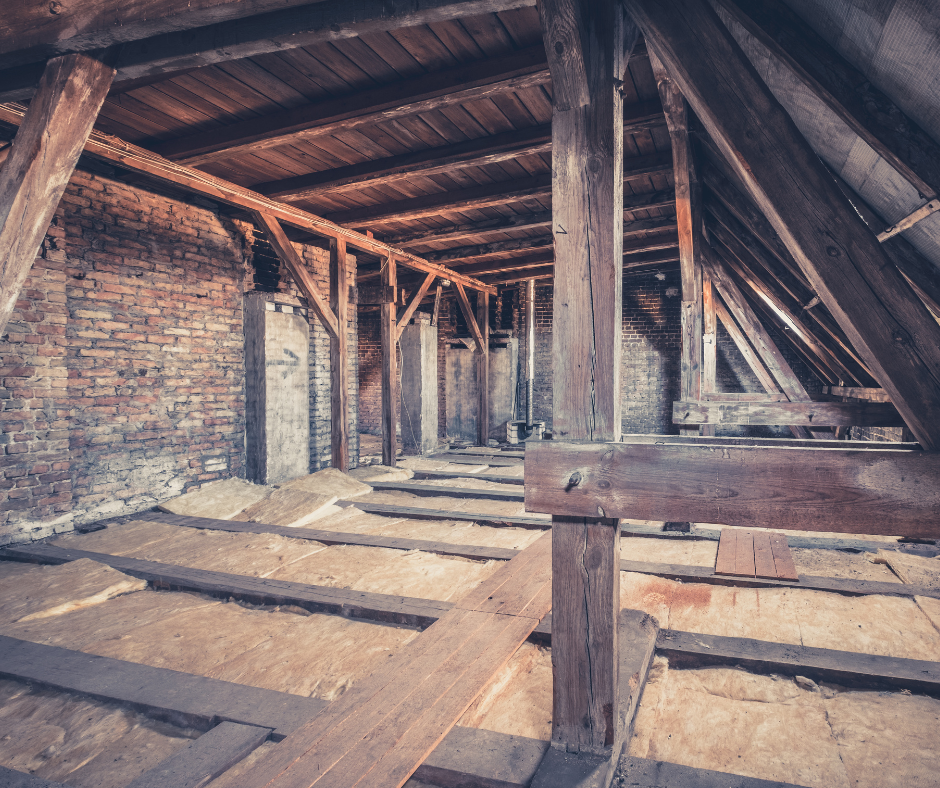
Does a home inspector always go into the attic?
A home inspector is required to inspect the attic insulation and ventilation, but is not required to physically enter the attic if it isn’t safely accessible. In practice, I enter the attic on virtually every inspection where access is available, because it’s one of the most informative areas in the home.
What are the most common attic problems found during a home inspection?
In Northern Michigan, the most common findings are inadequate insulation for Climate Zone 6, blocked or insufficient ventilation, bathroom exhaust fans venting into the attic, evidence of ice dam water intrusion, and improperly installed attic pull-down stairs.
Can a home inspector find mold in the attic?
Yes. Attic mold is one of the things I specifically look for. If I find evidence of mold growth, I document it and typically recommend professional mold testing to confirm the type and extent before remediation.
What R-value of insulation should a Northern Michigan attic have?
The U.S. Department of Energy recommends R-49 to R-60 for attic insulation in Climate Zone 6, which includes Northern Michigan. Many older homes in the region fall short of this, which affects both energy efficiency and ice dam risk.
What does an attic inspection cost?
Attic inspection is included as part of a standard home inspection — it’s not a separate service. To get a quote for a home inspection in Gaylord, Petoskey, Traverse City, Charlevoix, Harbor Springs, or anywhere in Northern Michigan, call or text Scott at (989) 370-3683.
The Attic Tells the Truth
The attic is where I find some of the most significant issues of any inspection — and where homeowners, buyers, and even sellers are often the most surprised by what’s up there. That’s exactly why it gets my full attention on every inspection.
If you’re buying or selling a home in Northern Michigan and want to know what’s actually going on in the attic and throughout the property, I’d be glad to help. Call or text (989) 370-3683 or schedule your inspection online.

Scott Frakes, CMI®, is the owner of North Point Home & Property Inspections, LLC, serving Northern Michigan from Gaylord. A Board-Certified Master Inspector® with 24+ specialized certifications through InterNACHI, Scott has completed more than 2,000 inspections across the region. He serves Gaylord, Petoskey, Traverse City, Charlevoix, Boyne City, East Jordan, Harbor Springs, and surrounding communities.