

Log homes are one of Northern Michigan’s most distinctive property types — and one of the most misunderstood when it comes to home inspection. A log home inspection covers everything a standard inspection does, but it also requires knowledge of issues that simply don’t exist in conventional stick-built homes: log settling, chinking failure, hidden wood decay, and finish coating breakdown, among others.
If you’re buying a log home in the Gaylord area, Petoskey, Charlevoix, or anywhere in Northern Michigan, here’s what a thorough log home inspection should cover — and why it matters who you hire.
Why Log Home Inspections Are Different
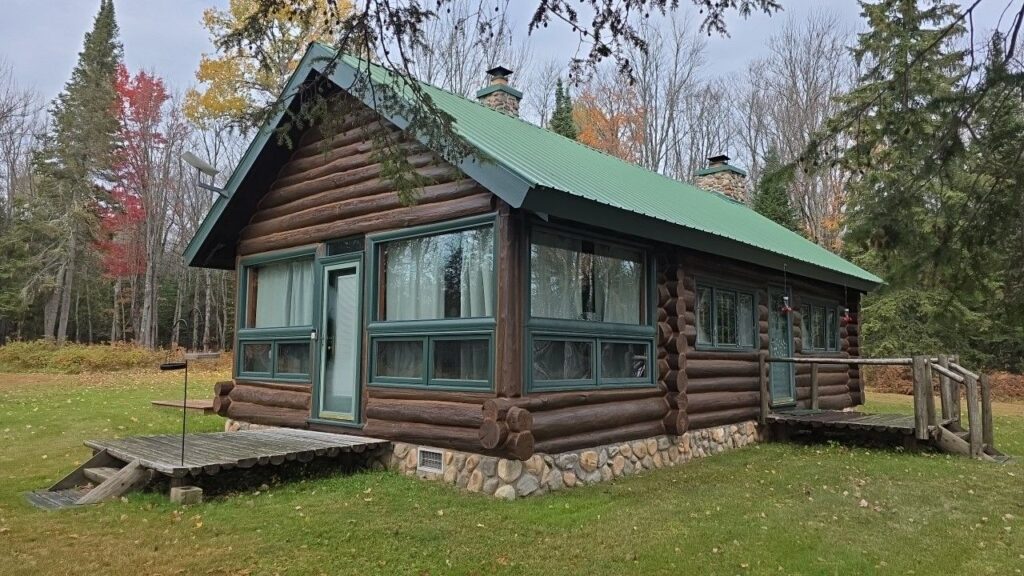
Not every home inspector is qualified to inspect a log home. Log construction introduces a set of challenges that fall outside the scope of a typical inspection. According to InterNACHI — the largest and most respected home inspection training and certification organization in the world — inspectors who don’t understand log home construction “don’t even know what they don’t know” and going into a log home inspection without the right training puts both the inspector and the buyer at risk.
The issues that make log homes unique come down to one fundamental fact: the structure itself is made of wood. Large-diameter, load-bearing, exposed wood. That changes everything about how moisture, insects, settling, and maintenance work — and it changes what needs to be checked during an inspection.
What a Log Home Inspection Covers
Log Settling
Settling is one of the most significant structural concerns in a log home, and it’s something most buyers have never heard of. Here’s why it happens: logs continue to shrink in diameter as they lose moisture over time. As the logs shrink, the walls lose height — in some cases, an 8-foot wall can lose up to 6 inches of height before reaching what’s called “equilibrium moisture content,” or EMC, with its environment.
That settling process affects more components than most people realize:
Doors and windows — A properly built log home will have a settling space above every door and window frame so the weight of the settling wall doesn’t bear down on them. If that settling space is missing — especially in a newer home built with green (freshly cut) logs — it’s a significant structural problem. This is one of the most important things I look for early in a log home inspection.
Partition walls — Interior partition walls in log homes are typically framed conventionally, which means they don’t settle the way log walls do. If the partition walls are framed from floor to ceiling without considering differential movement, the settling log walls will eventually transfer weight onto walls that weren’t designed to carry it. Over time, something breaks.
Staircases — Staircases attached to settling walls can develop unlevel treads as the wall height changes. It’s a subtle thing that’s easy to miss if you’re not looking for it.
Plumbing and electrical — In two-story log homes, vertical plumbing pipes and rigid conduit can accumulate stress as the walls settle around them. Proper construction uses slip joints or flexible materials to accommodate this movement. When that accommodation isn’t made, the stress shows up eventually.
Screw jacks — Some log homes use adjustable screw jacks to manage settling over time. They’re often hidden behind trim, so you have to know where to look.
Wood Decay — Visible and Hidden
Wood decay is probably the most common concern in a log home inspection, and it comes in two forms: the kind you can see, and the kind you can’t.
Visible decay tends to show up first at the log ends at outside corners, where exposed end-grain absorbs moisture faster than the rest of the log surface. Lower wall logs are also vulnerable — they can be repeatedly soaked by rain splashback and have less protection from the roof overhang. I’m looking for dark discoloration, soft spots, and any design features that are directing water toward the logs rather than away from them.
Hidden decay is the more serious problem. If an impermeable finish coating is applied to log exteriors while the moisture content inside the log is still high enough to allow decay, that moisture gets trapped. Decay can progress from the inside out, and a log home can sustain significant structural damage with very little visible evidence on the surface.
Most home inspectors cannot fully evaluate the interior condition of logs — and that’s something I’ll always disclose clearly. What I can do is identify conditions that make hidden decay more likely: the wrong finish coating, signs of past moisture infiltration, and local climate factors that increase risk.
Northern Michigan’s humidity and freeze-thaw cycles create real pressure on log exterior finishes. A coating that’s failing — one that absorbs water rather than repelling it — accelerates both visible and hidden decay. In the field, we can test the finish coating by checking whether water beads on the surface or soaks in. Absorption means the coating has failed and the logs are at risk.
Chinking and Sealants
Chinking is the material used to seal the gaps between logs. It serves two purposes: keeping conditioned air in and keeping moisture, cold air, and pests out. In Northern Michigan winters, failing chinking isn’t just a comfort issue — it’s a significant source of heat loss and potential water infiltration.
During a log home inspection, I’m evaluating the condition of the chinking throughout the structure: looking for cracking, separation, missing sections, and any areas where the seal has broken down. I’m also checking the perimeter around windows, doors, and any log penetrations where sealants are used in place of traditional chinking.
Wood-Destroying Insects
Because log homes have so much exposed wood, insect activity is a significant concern. Carpenter ants are the primary threat in Northern Michigan. We also occasionally see termite activity here, although termites are far more common in the southern regions of the state. Both are capable of serious structural damage, and both can be present for a long time before the evidence becomes obvious.
During a log home inspection, I’m looking for:
- Entry and exit holes in the logs (size and shape can help identify the species)
- Frass — the sawdust-like material wood-boring insects leave behind
- Wing piles near windows or at wall/floor junctions, which can indicate swarming activity
- Hollow-sounding wood when tapped
Carpenter ants are especially common in the Northern Michigan region. They prefer wood that’s already been softened by moisture, which means insect activity and moisture problems often appear together.
Exterior Finish and Maintenance History
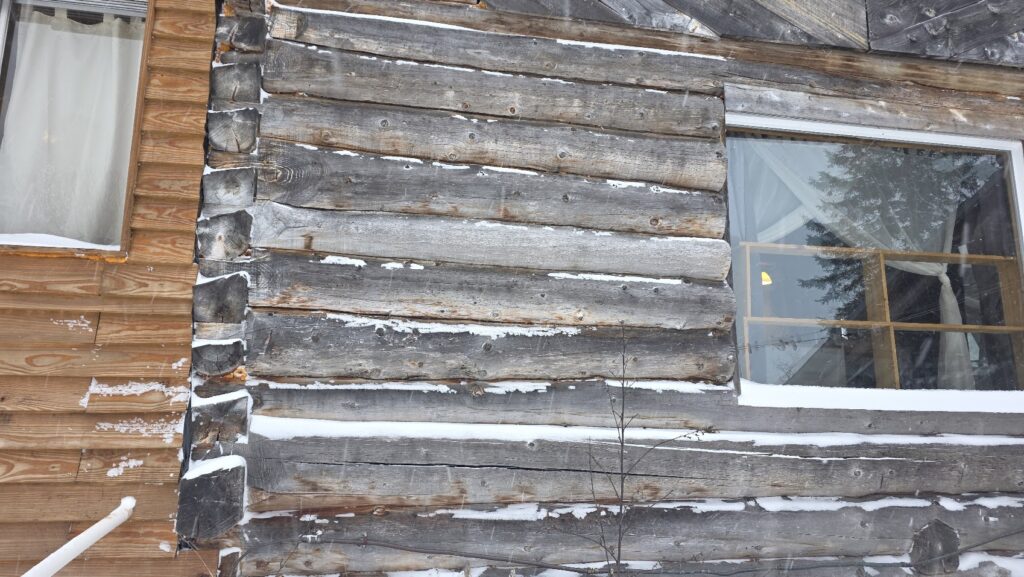
Log homes require ongoing maintenance in ways that conventional homes don’t. The exterior finish — whether stain, sealant, or another coating — needs to be reapplied periodically to protect the logs from UV damage, moisture, and insects. When that maintenance has been deferred, the effects compound over time.
During the inspection, I’m assessing the current condition of the finish, looking for evidence of checking (the natural cracks that develop in logs as they dry), and trying to get a sense of the property’s maintenance history. A well-maintained log home is a very different proposition from one that’s been neglected — and buyers deserve to know which they’re dealing with.
Foundation and Structural Support
Log homes still require a solid foundation, and I evaluate it the same way I would any other property: looking for settling, cracking, moisture intrusion, and drainage concerns. I also examine the beams, joists, and any posts supporting porch roofs or loft areas, where screw jacks are commonly found.
Fire Safety
Wood is combustible, and log homes typically use more of it — including in the areas around fireplaces and wood stoves. I assess the condition of the chimney and flue, clearances around any wood-burning appliances, and the presence of functioning smoke and carbon monoxide detectors.
How Is a Log Home Inspection Different From a Standard Home Inspection?
A log home inspection covers all the same systems as a standard home inspection — roof, foundation, HVAC, plumbing, electrical, windows, and doors. The difference is that a log home or log cabin inspection adds a layer of specialized assessment that most inspectors simply aren’t trained to perform.
Specifically, a log home inspector needs to understand:
- How log settling works and what to look for at doors, windows, partition walls, and staircases
- How to evaluate chinking and exterior finish coatings
- The difference between visible and hidden wood decay, and what conditions make each more likely
- Wood-destroying insect identification and what the evidence looks like in a log structure
- How local climate factors (in our case, Northern Michigan’s cold winters, humidity, and freeze-thaw cycles) interact with log construction
Not every inspector has that training. InterNACHI offers a specialized Log Home Inspection course, and it’s one of the reasons log home inspections are typically priced higher than standard inspections — the knowledge required is genuinely different.
Why Hire Scott Frakes, CMI® for Your Log Home Inspection?
As a Certified Master Inspector® — a designation held by fewer than 3% of home inspectors worldwide — I hold myself to the highest standard of knowledge and practice in the industry. I’ve completed InterNACHI’s specialized log home inspection training, and I inspect log homes regularly throughout the year across Northern Michigan, including in the Gaylord, Petoskey, Charlevoix, Boyne City, and Harbor Springs areas.
Log homes are a significant investment, and they’re not forgiving of a missed inspection item. If you’re buying one, you need an inspector who understands what you’re actually buying.
Frequently Asked Questions About Log Home Inspections
What does a log home inspection cost in Northern Michigan? Log home inspections are typically priced higher than standard home inspections because they require specialized training and take additional time. Contact Scott directly at (989) 370-3683 for a quote based on the property’s size and location.
How long does a log home inspection take? Log home inspections generally take longer than a standard inspection — plan for 3 to 4 hours for an average-sized property, and potentially more for larger or older homes.
What should I look for in a log home inspection report? A thorough log home inspection report should document the condition of the logs themselves (including any visible decay, checking, or insect evidence), the chinking and sealants, the exterior finish coating, settling-related observations at doors/windows/staircases, and all standard home systems. Ask your inspector if they’ve received specific training in log home construction.
Can a standard home inspection miss issues specific to log homes? Yes. The settling, chinking, hidden decay, and finish coating concerns that are central to a log home inspection are outside the scope of what most standard inspectors are trained to evaluate. Hiring an inspector without log home training on a log property is a real risk.
How often do log homes need to be inspected? If you already own a log home, a maintenance inspection every few years is a good idea — especially to evaluate the condition of the exterior finish and identify any decay or chinking issues before they become expensive problems. For buyers, a pre-purchase inspection is essential.
Do you inspect log cabins as well as larger log homes? Yes. Whether it’s a full-time residence, a vacation cabin, or a seasonal retreat, I inspect all types of log construction throughout Northern Michigan.
Schedule Your Log Home Inspection in Northern Michigan
If you’re under contract on a log home — or thinking about making an offer — don’t skip the inspection, and don’t hire a generalist. Call or text Scott Frakes, CMI® at (989) 370-3683 to discuss your property and schedule your inspection.
Schedule Online | Learn More About Scott’s Qualifications

Scott Frakes, CMI®, is the owner of North Point Home & Property Inspections, LLC, serving Gaylord, Petoskey, Charlevoix, Boyne City, Harbor Springs, Traverse City, and all of Northern Michigan. He is a Certified Master Inspector® through the Master Inspector Certification Board and an InterNACHI-certified inspector with over 24 specialized certifications and 12+ years of field experience.