
If there’s one thing I’ve learned inspecting properties across Northern Michigan, it’s this: decks are neglected. Not occasionally — consistently, and across all price points. Some of the most expensive lakefront homes I’ve walked into have decks in serious disrepair, with weathered and rotting wood, failing railings, and flashing that was either never installed or done wrong.
Deferred maintenance on decks is easily in the top ten issues I find during home inspections in our area. Why should that matter to buyers? Because deck problems aren’t just cosmetic. A structurally compromised deck is a safety hazard, and repairs can be costly. That’s why a thorough deck inspection is part of every home inspection I perform.
What should you know about deck inspection as a home buyer or seller in Gaylord, Harbor Springs, East Jordan, or elsewhere across Northern Michigan? In this post, I’ll walk you through what a deck inspection covers, what I commonly find in our area, and common questions many buyers and homeowners have about decks and deck inspection.
What Does a Deck Inspection Include?
Deck inspection falls under the exterior portion of a standard home inspection. According to the InterNACHI Standards of Practice, inspectors are required to inspect porches, patios, decks, and balconies, as well as railings, guards, and handrails. Here’s what I look at systematically on every deck:
Decking surface and overall condition
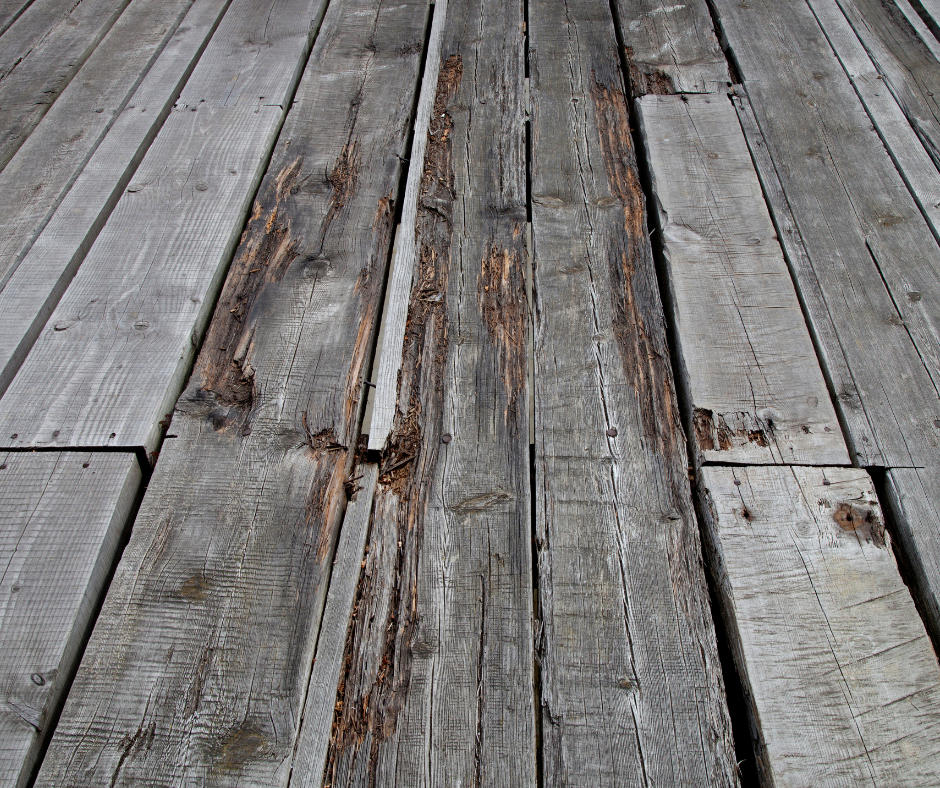
The decking boards themselves tell you a lot. I’m looking for wood rot, surface weathering, splitting, checking (surface cracks), cupping, and signs of insect damage. In Northern Michigan, our freeze-thaw cycles are hard on wood surfaces — water gets into cracks, freezes, expands, and accelerates deterioration. Untreated or unsealed decking degrades quickly in this climate, and I routinely find decking that’s well past the point of simple maintenance.
Structural framing: joists, beams, and posts
Underneath the decking surface is where the real structural story is told. I look at joists, beams, and posts for rot, improper spacing, undersized members, and inadequate support. Common construction shortcuts I find include joists spaced too far apart, the use of white wood (non-pressure-treated lumber) in ground-contact or exposed applications, and posts that aren’t properly anchored or are showing signs of decay at the base.
Ledger board and attachment to the home
For attached decks, the ledger board — the board that connects the deck frame to the house — is one of the most critical components I inspect. It’s also one of the most commonly problematic. The ledger must be properly fastened to the home’s rim joist or band board. Critically, it must also have adequate flashing to prevent moisture from migrating behind it and into the home’s structure.
Flashing
Flashing deserves its own mention because it’s so frequently wrong. It’s surprising how many attached decks either have no flashing at all or have flashing that’s been improperly installed. When flashing is absent or failing, water infiltrates behind the ledger board and into the home’s rim joist and wall framing — damage that can be extensive and expensive by the time it’s discovered. Even free-standing decks can have moisture problems if they’re built tight to the house without a gap to allow water to drain away.
Railings, guards, and handrails
Railing issues are among the most common safety deficiencies I document, and several of them are child safety concerns. I check for:
- Loose or unstable railings that move when pressure is applied
- Baluster (spindle) spacing wider than 4 inches — the standard intended to prevent a child’s head from passing through
- Climbable guardrail designs, such as horizontal rails that function as a ladder
- Handrails and guardrails that are broken or just plain missing
- Non-graspable handrails — and this is worth explaining
A graspable handrail sounds simple, but it’s frequently overlooked. Many contractors in our area build handrails out of 2×6 lumber laid flat. It looks clean and finished, but it’s genuinely difficult for most hands — adult or child — to grip in an emergency. InterNACHI’s deck inspection standards specifically identify this as a common deficiency: handrails should be graspable, continuous, and smooth, not flat boards.
Hardware and fasteners
I look at all visible hardware — joist hangers, post bases, lag screws, carriage bolts, and deck screws. I’m checking for corrosion, loose or missing fasteners, incorrect fastener types, and hardware that was never rated for exterior or pressure-treated lumber applications. Galvanized or stainless steel hardware is required when in contact with pressure-treated wood; using the wrong fasteners accelerates corrosion and structural failure.
Stairs and stair railings
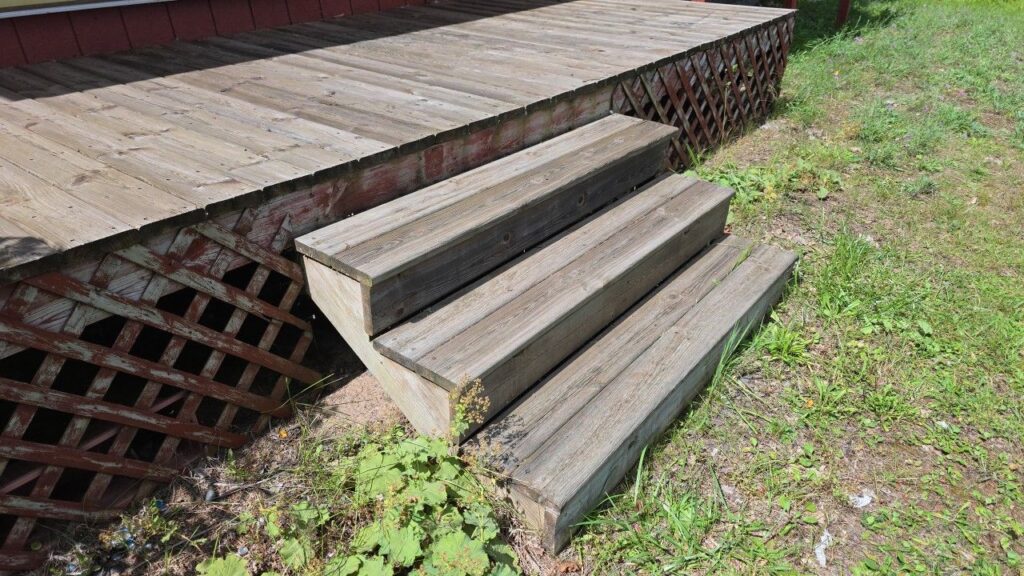
Deck stairs get the same scrutiny as the deck itself — structural integrity, tread and riser dimensions, and handrail graspability. Any stairway with four or more risers requires a handrail on at least one side.
Footings and posts
Where I can access them, I examine footings and posts. Deck posts should be properly supported on concrete footings that extend below the frost line. In Northern Michigan, that means deep. Posts showing rot at the base, posts bearing directly on soil or on improperly sized footings, and posts that have shifted are all red flags.
What Are the Most Common Deck Problems Found in Northern Michigan?
Based on my inspections across Otsego, Emmet, Charlevoix, and surrounding counties, these are the issues I find most often:
Deferred maintenance and weathering
This is the number one finding, by a wide margin. Most homeowners simply don’t maintain their decks — no sealing, no staining, no annual inspection. Northern Michigan’s climate is hard on outdoor wood: hot summers, cold winters, significant snow loads, and spring moisture cycles. A deck that isn’t maintained regularly will show significant deterioration within a few years and may reach a point where repair is more expensive than replacement.
Railing and guardrail deficiencies
Loose railings, improper baluster spacing, climbable designs, and non-graspable handrails are among the most consistent findings on every inspection. These aren’t aesthetic issues — they’re safety issues, especially in homes with children.
Flashing failures on attached decks
Missing or inadequate flashing at the ledger board is one of the most critical deck deficiencies I find, because the damage isn’t confined to the deck. Water that gets behind the ledger works its way into the home’s rim joist and wall framing, where it can cause rot that’s invisible until it’s significant.
Poor original construction
Many decks in this area were owner-built or built by general handymen rather than contractors following current building standards. I find joists with improper spacing, non-pressure-treated lumber used in exposed applications, and improper or missing fasteners. It doesn’t matter how well you take care of a poorly built deck – it can still create safety issues.
Settling and unlevel decks
Frost heave, post movement, and footing failure can all cause a deck to settle unevenly over time. I recently inspected a deck that had settled to slope toward the house — redirecting rainfall and snowmelt toward the structure rather than away from it. This is a moisture problem waiting to happen.
Snow and ice load damage — a Northern Michigan-specific issue
This one doesn’t come up in most deck inspection resources, but it’s real in our area. Homes situated where snow slides off a steep roof, or where large ice and snow accumulations build up, can experience repeated heavy impacts on deck railings and surfaces. Even a well-built deck will show accelerated wear and railing damage when hammered by falling snow and ice season after season. I pay particular attention to railings and connections on decks in these locations. This is especially relevant during summer inspections. Most buyers won’t know to consider this issue – but a good home inspector will!
What Accounts for Most Deck Collapses?
Deck collapses are relatively rare, but when they happen they can cause serious injuries. The most common cause is ledger board failure. The ledger board is the connection point between the deck and the home. When it fails — due to rot, inadequate fastening, missing flashing, or attachment to the wrong structural member — the deck can separate from the house entirely.
This is why the ledger board receives such close attention during a professional deck inspection. A deck that looks perfectly fine from above can have a failing ledger connection that isn’t visible without getting underneath and looking closely.
Does a Home Inspection Include the Deck?
Yes. Decks are a standard component of every home inspection I perform.
But like all components of a home inspection, deck inspection is a visual examination of accessible areas, and limitations sometimes apply. I can’t inspect deck components that are buried, concealed, or inaccessible. If there is extensive vegetation, storage, or snow under or on a deck that limits access to the understructure or decking surface, I’ll note that limitation in the report.
How Often Should a Deck Be Inspected?
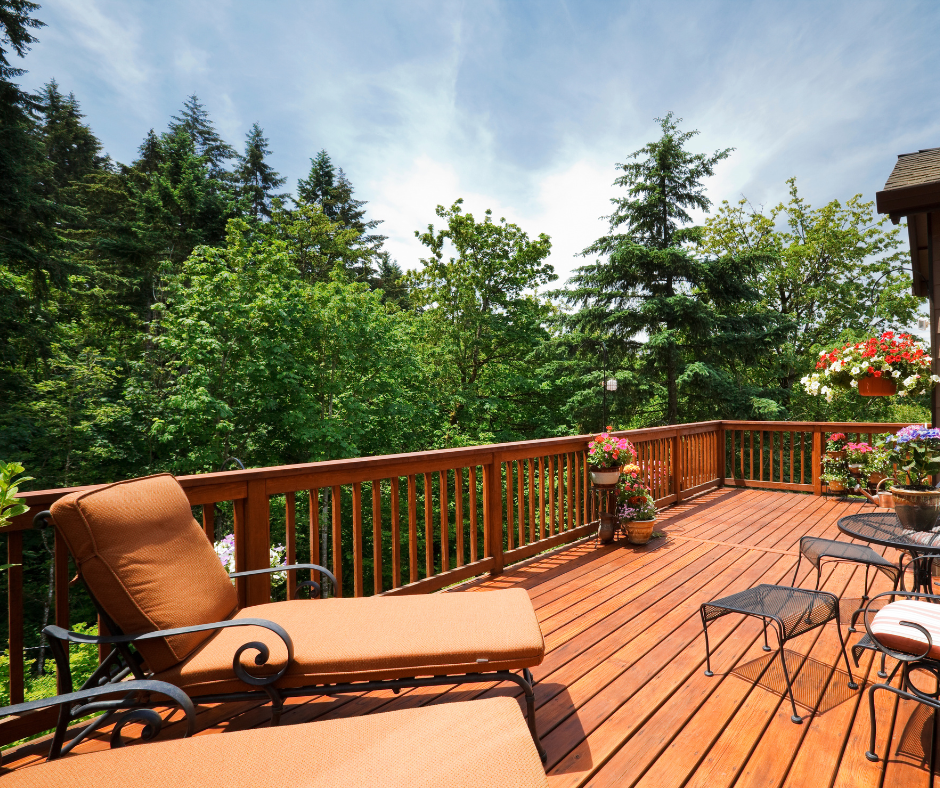
As a homeowner, a good rule of thumb is to have your deck looked at as part of an annual home maintenance review — ideally in spring after the freeze-thaw season has done its work.
Here is a simple deck inspection checklist you can do yourself as a homeowner or buyer:
- Look for surface checking and splitting in the decking boards.
- Test your railings by applying firm lateral pressure.
- Check for discoloration or soft spots that might indicate rot.
If you’re a homeowner seeing any of those signs, it’s time to fix the minor issues and have a qualified contractor take a closer look at any possible bigger ones you’re concerned about.
For buyers, of course, the time to get a thorough deck inspection is before you close — not after. And a professional home inspection from a Certified Master Inspector® will find what most untrained eyes will miss.
Frequently Asked Questions About Deck Inspections
What do home inspectors look for on a deck?
A home inspector examines the decking surface, structural framing (joists, beams, and posts), the ledger board and its connection to the home, flashing, railings and guards, hardware and fasteners, stairs, and footings. The goal is to identify safety hazards, structural deficiencies, and deferred maintenance that affect the deck’s condition and longevity.
What is the most common cause of deck collapse?
Ledger board failure is the leading cause of deck collapses. The ledger board is the structural connection between the deck and the home. When it’s inadequately fastened, lacks proper flashing, or has deteriorated due to moisture infiltration, the deck can separate from the house without warning.
Are railing issues really a safety concern?
Yes, and they’re among the most commonly documented deficiencies on deck inspections. Loose railings, balusters spaced more than 4 inches apart, climbable guardrail designs, and non-graspable handrails all represent genuine safety hazards — particularly for children.
What is a ledger board, and why does it matter?
The ledger board is the horizontal board that attaches an attached deck’s frame directly to the home’s structure. It’s one of the most critical components of a non-freestanding deck. Proper installation requires correct fasteners, adequate fastener count, and — critically — flashing to prevent moisture from getting behind it. Ledger board problems are a top cause of both structural deck failure and hidden moisture damage to the home.
Can I inspect my own deck?
You can do a basic visual check: clear the deck of any vegetation or debris, look for surface rot, test railings for stability, and look for discoloration or soft spots. But a professional deck inspection as part of a home inspection goes further: examining the understructure, assessing hardware and fastener condition, checking ledger board attachment, and identifying code-level safety deficiencies that aren’t always obvious to a homeowner.
Is a deck inspection included in a home inspection?
Yes. At North Point Home & Property Inspections, deck inspection is included in every standard home inspection. There is no separate fee or add-on for deck inspection — it’s part of a complete inspection of your home’s exterior systems and components.
Ready to Schedule Your Northern Michigan Home Inspection?
Are you buying a home in Northern Michigan and want to know exactly what you’re getting into before you close? Or are you a homeowner looking out for your family’s safety or getting your house in top shape to sell?
Either way, I encourage you to schedule a professional home inspection — deck and all — to help you stay safe and know exactly what you need to know about this house to meet your goals. I inspect properties throughout Gaylord, Petoskey, Charlevoix, Boyne City, Harbor Springs, East Jordan, Grayling, Traverse City, and the surrounding area. Call or text (989) 370-3683 orschedule online to get started.

Scott Frakes, CMI®, is a Certified Master Inspector® and InterNACHI-certified home inspector serving Gaylord, Petoskey, Charlevoix, Boyne City, Harbor Springs, East Jordan, Grayling, Traverse City, and all of Northern Michigan. To schedule a home inspection, call or text (989) 370-3683 or book online here.