
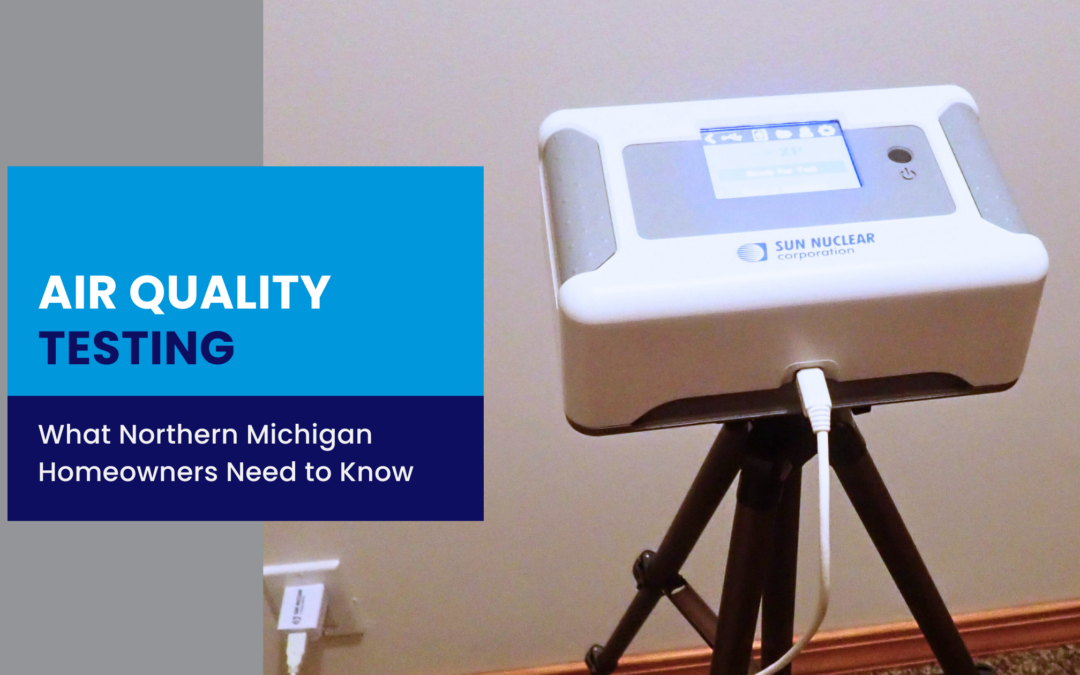
You walk through a house you’re thinking about buying and you check everything you can see. The roof. The foundation. Whether the furnace looks like a dinosaur. But what you can’t check is the air itself — air that your family will breathe roughly 20,000 breaths a day, mostly indoors.
That’s the part homeowners tend to miss. But don’t get me wrong: it’s not carelessness. It’s because air is invisible. There’s nothing to walk up to and examine. Indoor air quality testing turns that invisible question into measurable numbers, so instead of wondering whether the musty smell in the basement means something, you know.
Here in Northern Michigan, this matters more than it does in most of the country. Our homes are built tight to hold heat through long winters. That’s excellent for your heating bill, but not for airborne pollutants that would otherwise dissipate. Moisture intrusion is also a seasonal fact of life here, which creates ideal conditions for mold growth. At North Point Home & Property Inspections in Gaylord, MI, I work with buyers and homeowners who would rather have environmental testing handled alongside the inspection than scheduled as a separate visit weeks later. Below, I’ll cover what IAQ testing measures, when it’s worth scheduling, and what to do with the results.
[Table of Contents]
What indoor air quality testing actually measures
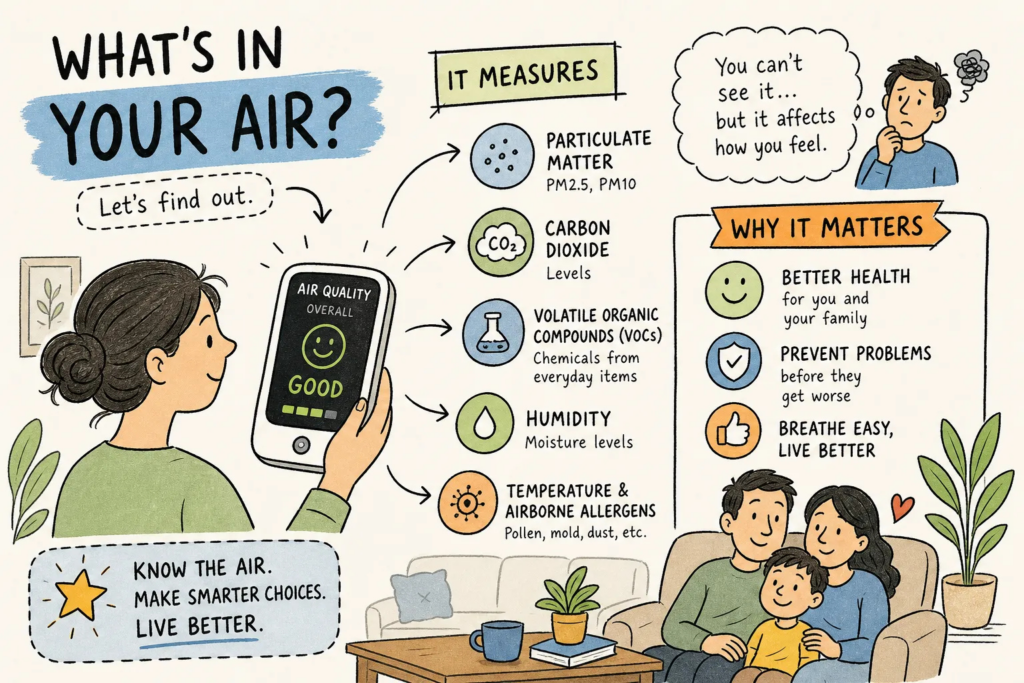
Most people assume indoor air quality testing is one simple test. It isn’t. A comprehensive home air quality test covers several distinct categories of pollutants, each with its own source, health risk, and acceptable threshold. Here’s what typically gets measured:
- Particulate matter (PM2.5 and PM10) — combustion byproducts, dust, and biological debris circulating through your HVAC system.
- Carbon monoxide (CO) — produced by combustion appliances like gas furnaces and water heaters. An acute safety hazard at elevated levels.
- Carbon dioxide (CO2) — also from combustion appliances, but primarily useful as a ventilation indicator rather than a direct toxin at typical residential levels.
- Volatile organic compounds (VOCs), including formaldehyde — offgassing from building materials, furniture, adhesives, and fresh paint.
- Radon gas — a radioactive soil gas that enters through foundation cracks and floor-wall joints. Radon requires its own dedicated test, not a general air sample.
- Mold spores — circulating from moisture-damaged areas in basements, crawl spaces, and attic rim joists. Mold testing is also a separate service with its own sampling method and lab analysis.
Health benchmarks worth knowing
The EPA sets 4 pCi/L as the U.S. action level for radon (EPA, “A Citizen’s Guide to Radon“). CO2 above 1,000 ppm signals poor ventilation, according to ASHRAE Standard 62.1. PM2.5 above 15 µg/m³ on a 24-hour average is a concern per WHO Air Quality Guidelines (2021). Formaldehyde above 50 µg/m³ over an 8-hour period warrants attention based on Health Canada guidance. Mold has no single numeric threshold; what matters is the species identified and individual sensitivity. Total VOCs lack a regulatory action level, which makes elevated TVOC readings a screening signal rather than a definitive finding on their own.
Symptoms that point to an air quality problem
An IAQ test isn’t just for people who already suspect a problem. But certain physical symptoms make testing genuinely worth scheduling.
Persistent headaches, unexplained fatigue, respiratory irritation, and allergy-like symptoms with no clear seasonal trigger can point to prolonged low-level exposure to VOCs, carbon monoxide, or mold. If you or your family feel markedly better away from home and worse when you return, that pattern deserves a serious look.
Radon is the exception. It causes no acute symptoms at all. Its established health risk is long-term lung cancer from cumulative exposure, which is exactly why radon testing matters regardless of how you feel day to day.
Symptoms alone can’t identify a specific pollutant. That’s what testing is for.
Consider testing your home’s air quality when…
- Buying a home, especially one built before 1980, when building materials and ventilation standards differed significantly, or one that’s been closed up for an extended period.
- Completing a renovation, or adding new carpet or furniture.
- You notice a musty odor that doesn’t go away, or any history of water intrusion.
- Your home has combustion appliances, particularly older furnaces and water heaters.
Buyers are in a particularly strong position here. If IAQ testing happens before closing and results come back elevated, you have documented leverage to negotiate remediation costs as part of the deal.
Why Northern Michigan homes carry elevated risk
Freeze-thaw cycles can, over repeated seasons, widen foundation cracks and increase radon entry risk. Lake-effect moisture and cold, extended heating seasons encourage mold growth in basements and crawl spaces that lack vapor control. And tightly sealed, energy-efficient construction traps pollutants that would otherwise dissipate through natural air exchange. In this region, IAQ testing isn’t precautionary; it’s practical.
DIY vs. Professional Indoor Air Quality Testing
Once you decide to test, you have a real choice between screening yourself and hiring it out. People often ask me “What’s the difference between a home air quality test and the testing services you offer?” Both have their place, but the two differ meaningfully in accuracy, cost, and the detail of findings they produce. Here’s the scoop:
DIY air quality test kits and smart monitors
Smart IAQ monitors give you continuous, real-time readings on PM2.5, CO2, VOCs, humidity, and in some cases radon. Passive DIY kits, including charcoal canisters for radon and swab kits for a mold air test, are effective screening tools when handled correctly. Lab analysis typically adds $30 to $75 for each sample you send in, based on standard laboratory pricing for residential environmental testing. Consumer monitors are accurate enough for pattern-spotting and general screening, but they are not laboratory-grade instruments.
Professional IAQ assessment
A professional assessment adds capabilities that consumer tools simply can’t match: calibrated pump-based air sampling with precise flow rates, quantitative concentration data rather than presence/absence readings, species-level mold identification, and remediation guidance based on root cause rather than generic advice.
The credential difference is real. Professional indoor air quality testing requires formal training and certification, not just equipment. I hold InterNACHI’s Indoor Air Quality Tester certification along with more than 24 other specialized certifications, all listed on my InterNACHI profile. That training covers sampling protocol, interpretation, and knowing when a reading means something and when it doesn’t. These are all areas where most DIY results go wrong.
Bottom line: if you’re buying a home or dealing with confirmed symptoms, the professional route provides the quantitative data that actually supports a remediation decision.
What elevated results mean and what air quality remediation actually costs
A positive finding on any IAQ test raises two immediate questions: how serious is it, and what does fixing it cost? The answers depend heavily on which pollutant came back elevated and the severity of the reading.
- Radon above 4 pCi/L warrants active sub-slab depressurization. That means installing a pipe-and-fan system that redirects soil gas before it enters the home. Installation runs $800–$2,500 nationally, with annual operating costs of $50–$150 for electricity. This is not a DIY repair; it requires a certified mitigation contractor.
- Mold remediation costs scale with the affected area. Small areas under 10 square feet often fall within DIY range at $10–$200 in supplies. Professional remediation for medium to large contamination typically runs $1,100–$7,000, depending on whether structural materials need replacement.
- For VOCs, source identification matters more than equipment. Removing offgassing materials, including old carpet, certain adhesives, and fresh paint in enclosed spaces, is always the first step. Activated carbon air purifiers run $200–$1,000 for quality units, and whole-house ERV/HRV ventilation systems cost $1,500–$5,000 installed.
- High PM2.5 (particulate) responds well to MERV-13 or higher HVAC filters ($15–$50 per filter) or portable HEPA units ($150–$600 per room). In most cases, a combination of source elimination and targeted filtration resolves the issue without structural remediation.
Indoor air quality testing in Northern Michigan: how it works (and why one inspector matters)
Radon testing and air sampling are two different services. Radon uses its own equipment and its own 48-hour protocol, and it carries its own fee. Mold testing and broader air quality testing, on the other hand, are really the same service at different levels: I collect the air samples the same way with the same equipment, and what changes is what the lab analyzes for and what they charge to do it. A standard mold test looks at spores; expanding the scope to particulates and VOCs means the same samples get analyzed more thoroughly. Neither is included in a standard home inspection.
What you can do is order them together. Scheduling them as separate appointments with separate providers means more coordination, more visits to your home, and more time between a question and an answer. Ordering the environmental testing you need alongside your home inspection means one inspector, one schedule, and one point of contact for the results as they come in.
Here’s how it works in practice. You schedule a home inspection in Gaylord, Petoskey, or Charlevoix, and you add environmental testing to the order. During that same visit, I place radon canisters, collect mold samples, or run air quality sampling — whichever you’ve requested. Radon takes a return trip 48 hours later so I can retrieve the equipment and read the results. Mold and VOC samples go to the lab. Radon results are ready as soon as I pick up the equipment. Lab results on the air samples follow within three to five business days. You get them from one person, in context, rather than chasing separate providers weeks apart.
Credentials matter, especially in Michigan, which does not require a statewide home inspector license. The bar for calling yourself a home inspector in this state is low. Look for voluntary credentials like the Certified Master Inspector® (CMI®) designation, held by a small minority of inspectors worldwide, and confirm your inspector has documented experience with environmental testing, not just structural evaluation. I hold the Board-Certified Master Inspector® designation along with more than 24 specialized certifications, and I’ve completed over 2,000 inspections across Northern Michigan.
Frequently asked questions about indoor air quality testing
How long does a professional indoor air quality test take?
Sample collection typically adds 30 to 40 minutes to a home inspection visit. Lab results for mold and VOC samples generally return within three to five business days. Radon is a 48-hour test; I place the equipment and return about two days later to retrieve it, then read the results directly from the unit.
What is a normal indoor air quality reading?
Acceptable ranges vary by pollutant. Radon should be below 4 pCi/L (the EPA action level). CO2 should stay under 1,000 ppm in occupied spaces. PM2.5 should remain below 15 µg/m³ on a 24-hour average. There is no single universal “normal” score; each pollutant has its own benchmark, and the combination of readings tells the full picture.
Can I use a DIY air quality test kit instead of hiring a professional?
DIY kits are a reasonable starting point for screening, particularly for radon. Their limitations show up when results come back elevated: a kit can tell you concentrations are high, but it won’t identify the source or assess severity across multiple pollutants at once.
When should I schedule indoor air quality testing for my home?
Consider testing when buying a home, especially an older one; after visible water intrusion or chronic moisture problems; or when occupants have persistent headaches, unexplained fatigue, respiratory irritation, or allergy-like symptoms with no clear seasonal trigger. Also test if people feel markedly better away from the house, or if the home is tightly sealed for winter (as most Northern Michigan homes are).
If my radon or carbon monoxide test comes back high, what does that mean?
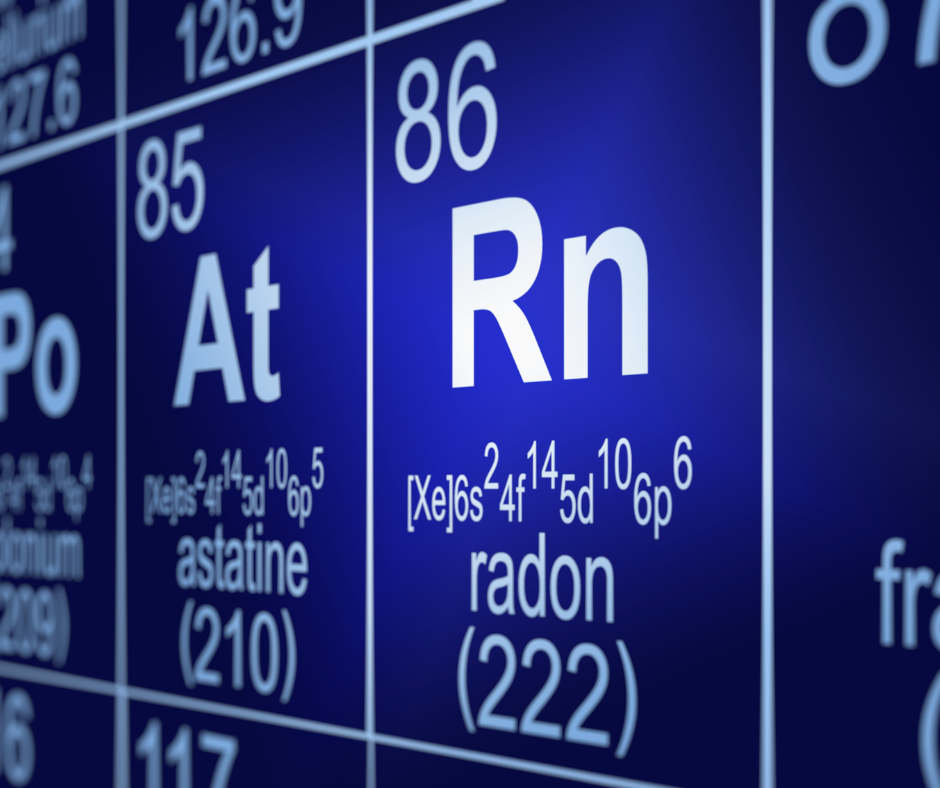
A radon result above 4 pCi/L exceeds the EPA action level and indicates you should pursue mitigation to reduce long-term lung cancer risk. Elevated CO is more urgent — it indicates an acute safety hazard from combustion appliances and requires immediate attention to locate and repair the source.
Can IAQ testing detect mold, and how are mold results interpreted?
Mold testing is a separate service that samples spores in indoor air and can point to moisture-damaged sources such as basements, crawl spaces, or attic rim joists. There is no single numeric mold threshold; interpretation depends on the species identified, indoor versus outdoor comparisons, and individual occupant sensitivity.
Is environmental testing included in a standard home inspection?
No. Radon testing and mold/ air quality testing are optional add-on services, each with its own fee. They can be ordered individually or together, and scheduled alongside your home inspection so everything happens in one visit.
The bottom line on indoor air quality testing
Indoor air quality testing gives homeowners and buyers concrete data on health risks that no visual inspection can surface. Whether you’re running a radon test in a Northern Michigan basement, ordering a mold air test after a wet winter, or evaluating VOC levels in a recently renovated home, the process is more accessible and more actionable than most people realize.
Consumer monitors and DIY kits work well as screening tools for spotting trends and flagging potential concerns. When results come back elevated, professional testing provides the quantitative data and remediation roadmap that tells you what to do next.
If you’re buying, selling, or simply want to know what’s in the air your family breathes every day, get in touch with me at North Point Home & Property Inspections in Gaylord, MI. Environmental testing can be added to your home inspection — radon, mold, air quality, or any combination — so you get answers on your schedule instead of chasing three separate appointments.

Scott Frakes, CMI® has completed more than 2,000 inspections throughout Northern Michigan and brings decades of construction and inspection experience to every property evaluation.
Scott Frakes, CMI® Certified Master Inspector® | InterNACHI Certified Since 2013 North Point Home & Property Inspections, LLC | Gaylord, MI