

Do I Need a Home Inspection When Buying a Home?
It’s not required by law in Michigan, and most lenders won’t mandate it either. But “not required” isn’t the same as “not necessary.”
The short answer to “Do I need a home inspection?” Yes. And I’d go further than that. In my experience completing over 2,000 home inspections across Northern Michigan, skipping an inspection is one of the riskiest decisions a buyer can make.
A home inspection gives you an independent, professional assessment of the property you’re about to spend hundreds of thousands of dollars on. It’s the one step in the buying process that’s working entirely in your corner.
Here’s what you need to know when you’re about to make the biggest investment of your life.
Are Home Inspections Required in Michigan?
It depends. Michigan does not require a home inspection as part of a real estate transaction at the state level, but there are a few situations where one may effectively be required — and many more where it’s strongly in your interest even when it isn’t.
Some lenders do require a home inspection, particularly for VA and FHA loans, which have their own property condition standards that go beyond a standard appraisal. Even when a lender doesn’t mandate one, an appraisal and a home inspection are not the same thing. An appraisal tells the lender what the home is worth. An inspection tells you what condition it’s actually in.
A few municipalities — currently concentrated in the Detroit area — also require a city inspection before a home can be sold. These are conducted by code inspectors and focus primarily on minimum safety and building code compliance. They’re not the same as a private home inspection, which provides a comprehensive top-to-bottom assessment of all accessible systems and components. Even in areas where a municipal inspection is required, many buyers choose to also hire a private inspector — because the two serve very different purposes.
It’s also worth knowing that Michigan does not license home inspectors. Certification is entirely voluntary, which means the quality and qualifications of inspectors can vary widely. That’s one reason credentials like my CMI® designation and InterNACHI certifications matter — they’re a meaningful signal in a field where no state minimum standard exists.
The bottom line: whether or not anyone is requiring an inspection, a professional buyer’s inspection is one of the most valuable steps you can take to protect yourself in a real estate transaction.
What Does a Home Inspector Look For?
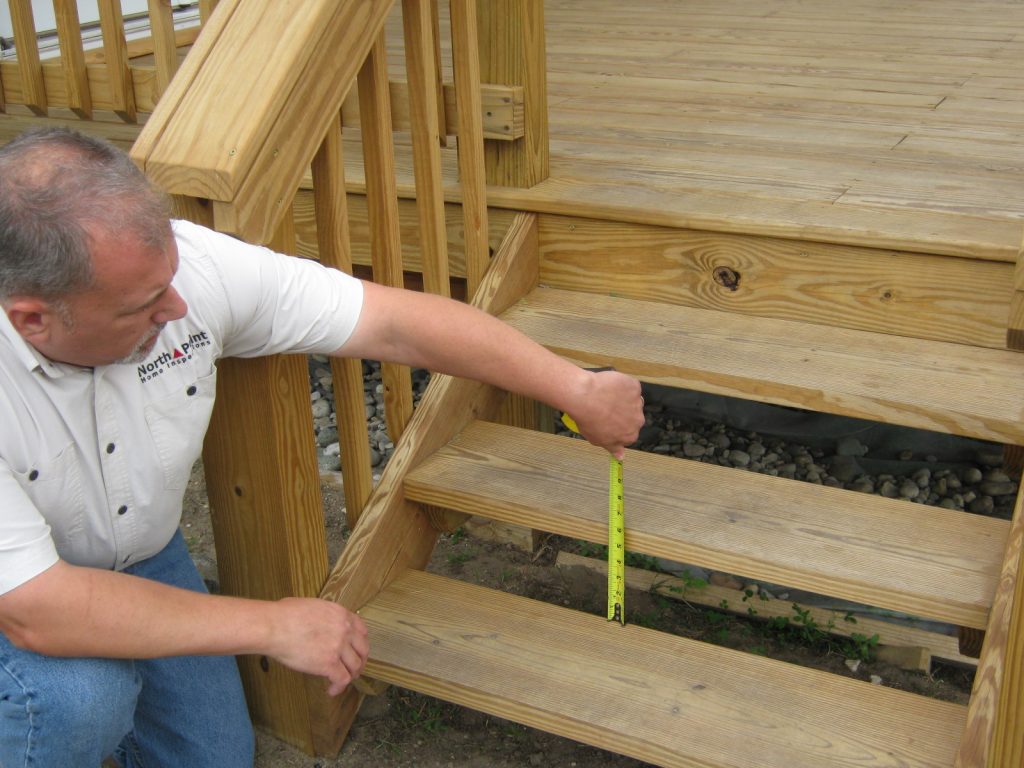
A home inspection is a visual examination of the accessible systems and components of a home. I follow InterNACHI’s Standards of Practice, which means I’m looking at a comprehensive list of items throughout the property. Here’s what that typically includes:
- Roof — condition of shingles, flashing, gutters, and drainage
- Foundation and structure — visible signs of settling, cracking, or water intrusion
- Exterior — siding, grading, driveways, walkways, and vegetation that could affect the home
- Attic — insulation, ventilation, and signs of moisture or pest activity
- Insulation — adequacy for Michigan’s climate zone requirements
- Electrical — panel condition, wiring, outlets, and safety hazards
- Plumbing — visible pipes, water pressure, water heater, and drainage
- HVAC — heating and cooling systems, filters, and venting
- Interior — walls, ceilings, floors, windows, and doors
- Garage — structure, door operation, and fire safety features
In Northern Michigan, I also pay close attention to things that are especially relevant to our climate — ice dam damage, freeze-thaw foundation issues, wood rot from prolonged moisture exposure, and heating systems that have been working overtime for years.
Does a Home Inspector Check for Mold?
This is one of the most common questions I get, and it’s an important one. A standard home inspection includes looking for visible signs of mold growth and the conditions that tend to cause it — moisture, poor ventilation, and water intrusion. If I see something that raises a concern, I’ll flag it in the report.
However, a standard inspection does not include laboratory testing to identify mold species or measure spore levels. That’s a separate service — mold testing — and it’s something North Point Home & Property Inspections offers as an add-on.
Mold testing is worth considering any time there’s a history of water damage, a musty odor in the home, visible staining of unknown origin, or if anyone in your family has respiratory sensitivities. In Northern Michigan’s climate, with long winters and significant humidity fluctuations, mold issues are more common than many buyers expect.
Does a Home Inspector Check for Asbestos?
Yes and no — and the distinction matters. During a standard inspection, I look for materials that are commonly associated with asbestos based on their age, appearance, and location. Things like older vinyl floor tiles, pipe and boiler insulation, cement siding, vermiculite attic insulation, and textured ceilings in homes built before 1980 can all be red flags worth noting.
If I spot something that raises a concern, I’ll document it in your report and recommend further evaluation. What I can’t do is confirm whether asbestos is actually present — that requires laboratory testing by a certified asbestos professional, which is outside the scope of a home inspection.
This is an important distinction for buyers of older Northern Michigan homes. Much of our regional housing stock predates 1980, which was the peak era for asbestos use in residential construction. Asbestos-containing materials aren’t necessarily an emergency — intact, undisturbed materials don’t release fibers and don’t pose an immediate health risk. The danger comes when those materials are damaged, deteriorating, or disturbed during renovation.
Regardless, we do keep an eye out for potential asbestos and flag it when we find it.
Are Home Inspectors Worth It?
Let’s look at this practically. A home inspection in Michigan typically runs a few hundred dollars depending on the size and complexity of the property. The issues a good inspector finds can range from minor maintenance items to major defects worth thousands of dollars in repairs — things like a failing roof, an aging furnace, or a foundation issue that would never be obvious to the untrained eye during a showing.
In my years of inspecting homes across Gaylord, Petoskey, Charlevoix, Boyne City, Harbor Springs, and the surrounding Northern Michigan area, I’ve seen buyers use inspection findings to renegotiate purchase prices, require sellers to make repairs before closing, or — in some cases — walk away from properties that would have become serious financial burdens.
The inspection fee is almost never the issue. What costs buyers is not knowing.
This isn’t only about dollars and cents. Buying a home is one of the biggest moments of your life, and it’s an emotional one. The excitement of finding the right place can make it tempting to skip steps and just get to closing. A home inspection slows that down in the best possible way — it gives you a clear-eyed look at exactly what you’re buying, so you can move forward with confidence instead of crossed fingers.
There’s also a safety dimension that goes beyond negotiating leverage. Faulty electrical systems, structural weaknesses, and health hazards like mold don’t just cost money — they put people at risk. Knowing about these issues before you move your family in means you can address them on your terms, not discover them under pressure after closing.
Beyond the immediate transaction, the inspection report is a roadmap that helps you protect your investment. Even when a home is in good shape, you leave with a clear picture of what systems are aging, what maintenance is coming, and what to watch for. That has value long after closing day.
Should You Be Present at the Home Inspection?
If you can make it, I’d encourage you to be there. Walking through the home with me gives you a chance to see things firsthand, ask questions as they come up, and leave with a much richer understanding of the property than any written report can convey on its own.
If your schedule makes it difficult to be there for the full inspection, a good strategy is to arrive toward the end. That’s typically when I do a walkthrough summary of the most significant findings, which many of my clients find extremely helpful.
That said, plenty of buyers can’t be there — out-of-state buyers, busy schedules, and tight timelines are all completely normal. You’ll still get everything you need. My reports are thorough, clearly written, and include photos so you can see exactly what I’m describing. If you have questions after reading it, I’m always happy to go through it with you by phone.
Either way, you’ll have a complete picture of the home’s condition before you make any decisions.
How Much Is a Home Inspection in Michigan?
Inspection fees vary based on the size of the home, the age of the property, and any add-on services. In Michigan, you can generally expect to pay somewhere in the range of $350–$500 for a standard buyer’s inspection on a typical single-family home, though larger or older properties may run higher.
At North Point, I provide upfront, transparent pricing. Call or text me at (989) 370-3683 and I’ll give you a clear quote based on your specific property.
If you’re also considering add-on services like radon testing or mold testing, those can typically be bundled with your inspection for better value than scheduling them separately.
Frequently Asked Questions About Home Inspections
Do I need a home inspection for a conventional loan? Not usually. Conventional lenders typically require an appraisal, not a home inspection. But getting an inspection is strongly in your interest, regardless of your loan type.
Do I need a home inspection for an FHA or VA loan? FHA and VA loans have stricter property condition requirements than conventional loans, and many lenders will require a home inspection as part of the approval process — not just an appraisal. Even when it isn’t explicitly required, a separate buyer’s inspection is always a good idea. The lender’s appraisal is working in the bank’s interest; your inspection is working in yours.
When should the home inspection happen? Typically after your offer is accepted and during your inspection contingency window — usually within 7–14 days of going under contract. Your purchase agreement should include an inspection contingency that allows you to renegotiate or walk away based on the findings.
What happens if the inspection finds problems? You have options. You can ask the seller to make repairs, request a price reduction to account for the issues, negotiate a credit at closing, or — if the problems are serious enough — walk away from the deal. Your real estate agent can help you navigate that conversation.
How long does a home inspection take? Most inspections take 2–4 hours depending on the size and condition of the home. Larger properties or homes with significant issues may take longer.
Can I do a home inspection myself? Technically, nothing stops you from doing your own walkthrough, but you – or even a licenced general contractor – are unlikely to catch what a trained and certified master home inspector will. A certified home inspector knows where to look, what to look for, and how to evaluate what they find. The value is in the expertise, not just the access.
Do home inspectors check for permits? Permit verification isn’t typically part of a standard home inspection scope. If you have concerns about whether permitted work was done on the home, that’s worth discussing with your real estate agent or checking directly with the local municipality.
Ready to Schedule a Home Inspection in Northern Michigan?
If you’re buying a home anywhere across Northern Michigan, I’d love to help. Call or text (989) 370-3683 to schedule your inspection or get answers to any questions. You can also book online at northpointhomeinspections.com.
You deserve to know exactly what you’re buying — before you sign.

Scott Frakes, CMI®, is the owner of North Point Home & Property Inspections, LLC, serving Northern Michigan from Gaylord. A Board-Certified Master Inspector® with 24+ specialized certifications through InterNACHI, Scott has completed more than 2,000 inspections across the region. He serves Gaylord, Petoskey, Traverse City, Charlevoix, Boyne City, East Jordan, Harbor Springs, and surrounding communities.